<?xml version="1.0" encoding="ISO-8859-1" ?>
<rss version="2.0">
<channel>
<title>Hebridean Whale and Dolphin Trust - News Feed</title>
	<description>This is a RSS news feed for the Hebridean Whale and Dolphin Trust</description>
	<link>http://www.whaledolphintrust.co.uk/</link>	
	    
			<item>
			<title>Finance Officer Vacancy</title>
			<link>http://www.whaledolphintrust.co.uk/news_article.asp?news_id=284</link>
			<description>  HWDT are looking for a new member of the team - a Finance and Administration Officer. To find out more please  click here .</description>
			<pubDate>Mon, 6 Feb 2012 00:00:00 GMT</pubDate>
			</item>
			
			<item>
			<title>Join Us Onboard in 2012</title>
			<link>http://www.whaledolphintrust.co.uk/news_article.asp?news_id=283</link>
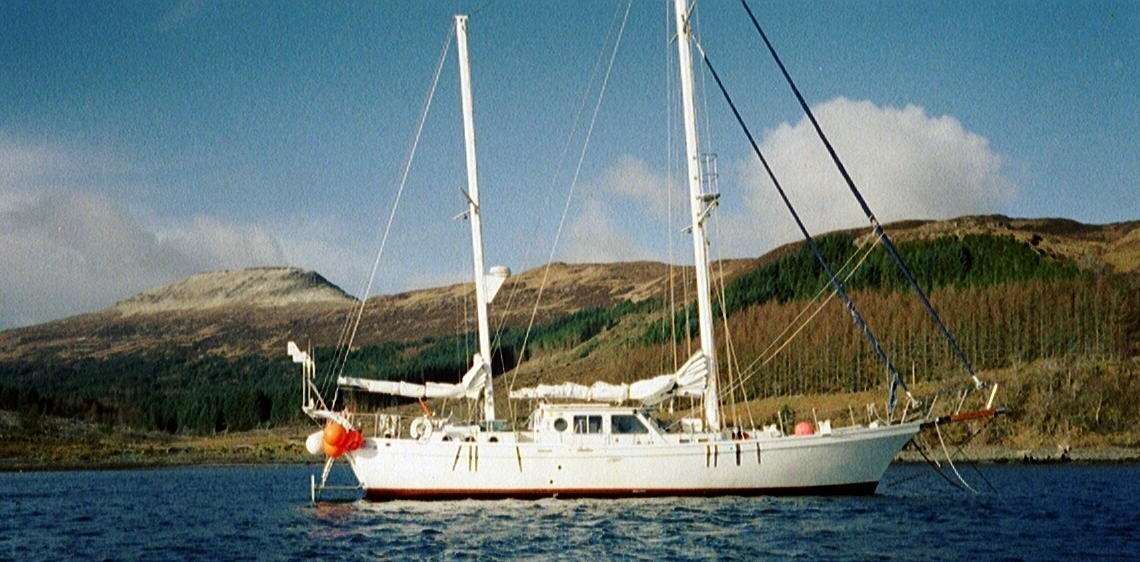
			<description>   Every season, since 2004, HWDT have been conducting research surveys from our research yacht Silurian, welcoming on board volunteers who effectively become marine mammal field scientists for the duration of the expedition. The Hebrides is home to some of the most spectacular, rugged landscapes in the UK, playing host to some very special wildlife. You can be assured that if you join a cetacean research survey, you&amp;rsquo;ll have the experience of a lifetime.     
  Participants will live on board Silurian, travelling hundreds of nautical miles while conducting visual and acoustic surveys, each night anchoring in a secluded bay with the opportunity to venture ashore remote and beautiful islands. Full training in cetacean and seabird identification will be provided as well as training in fundamental monitoring techniques. 
   2012 survey dates:  
 
         7th - 13th May - &amp;pound;850 participation  
         16th - 23nd May - &amp;pound;850 participation  
         27th May - 5th June - &amp;pound;1,000 participation  
         10th - 18th June* - &amp;pound;1,100 participation 
     8th - 14th July - &amp;pound;900 participation  
          31st Aug - 8th Sept - &amp;pound;1,000 participation   
 
      Most expeditions will rendezvous in Tobermory, HWDTs base on the Isle of Mull, however one survey* will rendezvous in Stornoway on the Isle of Lewis. The funds generated aren&amp;rsquo;t designed to create profit, rather fund the research programme and allow it to continue year after year. You can be assured that, by joining HWDT on board, you are directly contributing to conservation efforts and generating an extremely valuable dataset of the survey area. 
 2011 was a fantastic (if not a little wet) season, with a huge increase in minke whale numbers and, with more survey dedicated to the more northern and western parts of our survey area, a better understanding of a rare dolphin species - the white beaked dolphin. I have added some of the 2011 season photographs to our Facebook page which you can access by 'liking' our page.  In 2012, we hope to continue surveying further north and our Science Officer, Olivia Harries, is developing acoustic software that will detect white beak dolphins through the hydrophone, providing a much clearer picture of their distribution. White beaked dolphins are a colder water species only found in the northern reaches of the Hebrides. Being a cold water species they are more susceptible to disruption through climate change and therefore a better understanding of the species is crucial.    Without the contribution of our volunteers we wouldn&amp;rsquo;t be able to continue our research programme so please be assured that, if you do decide to join us onboard, you are directly contributing to a vital British conservation programme.  
       For more information please  click here . If you are interested in joining HWDT on board, please complete an  online form  or  contact the volunteer coordinator , Morven Summers, for more information.   
 </description>
			<pubDate>Wed, 25 Jan 2012 00:00:00 GMT</pubDate>
			</item>
			
			<item>
			<title>Please support the Run Around Mull</title>
			<link>http://www.whaledolphintrust.co.uk/news_article.asp?news_id=282</link>
			<description>   Over the Easter weekend of 2012, Caroline McKay will go for a 127 mile run around Mull&amp;rsquo;s coastline. The run aims to raise &amp;pound;5,000 for the conservation of Scotland&amp;rsquo;s spectacular marine environment and wildlife, by funding the work of charities The Hebridean Whale and Dolphin Trust and  RSPB Scotland . The project is inspired by and in memory of Caroline&amp;rsquo;s mother, Alice Lambert, who was a dedicated environmentalist and marine scientist, and lived on Mull.   Starting on Friday 6th April, the intention is to finish by Sunday 8th. The route will follow the road as far as it goes around the 300 mile coastline of Mull, and also feature a challenging interlude up Ben More and an off-road stretch where the road ends at the cliffs of Carsaig. The plan will be to complete at least 50 miles on days 1 and 2, leaving less mileage to cover on the final day given it will include Ben More. Friends and family will be running and supporting Caroline throughout. Please  click here  for more information about Run Around Mull.  Please  click here  to support Caroline in her run.  
   RUNNERS OR CYCLISTS ARE WELCOME TO JOIN CAROLINE FOR PART OR ALL OF THE CHALLENGE. </description>
			<pubDate>Tue, 17 Jan 2012 00:00:00 GMT</pubDate>
			</item>
			
			<item>
			<title>Report your winter sightings</title>
			<link>http://www.whaledolphintrust.co.uk/news_article.asp?news_id=281</link>
			<description>   HWDT would like to hear about your winter sightings of whales, dolphins and porpoises    Winter is always a slow time of year for sightings, what with the rougher seas making it harder to spot cetaceans and the cold, dark weather making it less enjoyable to be out with a pair of binoculars. Some of the species that are seen off the west coast of Scotland in the summer months have now moved out of the area for the winter. However other species, such as harbour porpoises, bottlenose dolphins and killer whales stay in Scottish waters all year round. Sightings reports at this time of year are therefore particularly useful to enable HWDT to monitor these seasonal differences.   You can report your sightings via HWDT's  online sightings form . If you would prefer, you can email your records to the  Sightings Officer , taking note of the date, time and location of the sighting, the species observed and how many animals were present. HWDT also encourage you to  take photos  of the dorsal fin of the animals in order to confirm the species and attempt to identify known individuals.   HWDTare particularly interested to hear of sightings from anyone travelling by ferry, especially onboard the CalMac MV Lord of the Isles on her one-off delivery cruise from  Oban to Ardrossan  on Tuesday 3rd January 2012.  </description>
			<pubDate>Fri, 30 Dec 2011 00:00:00 GMT</pubDate>
			</item>
			
			<item>
			<title>2012 Volunteer Programme Launched</title>
			<link>http://www.whaledolphintrust.co.uk/news_article.asp?news_id=280</link>
			<description>  In 2012, the Hebridean Whale &amp;amp; Dolphin Trust (HWDT), will launch its most comprehensive volunteer programme to date, allowing select candidates to experience many aspects of cetacean conservation management off Scotland&amp;rsquo;s west coast. HWDT believes that the basis of effective conservation is a combination of research and education; our volunteers will experience both of these aspects whilst working with HWDT. The volunteer will support the Hebridean Whale and Dolphin Trust&amp;rsquo;s Biodiversity Officer on board our research vessel Silurian during one of its monitoring surveys and will also support the Trust through interpretation, education and promotion when based at the Tobermory headquarters.   For further information about the programme and detail of how to apply please   click here  . </description>
			<pubDate>Wed, 21 Dec 2011 00:00:00 GMT</pubDate>
			</item>
			
			<item>
			<title>Report on cetacean strandings in the UK</title>
			<link>http://www.whaledolphintrust.co.uk/news_article.asp?news_id=279</link>
			<description>  A report by the UK Cetacean Strandings Investigation Programme ( CSIP ) has revealed that almost 3,500 whales, dolphins and porpoises have stranded on UK coastlines in the last six years. The study, co-ordinated by The Zoological Society of London ( ZSL ), details the investigation of cetaceans, as well as marine turtles and basking sharks, found stranded around the UK coast between 2005 and 2010. Seventeen different cetacean species were found and many had died of disease or starvation. Overall it recorded a fall in the number of strandings but said that some still weren't being reported. 
 The study includes data from the Scottish west coast and islands provided by HWDT. Between 2005 and 2010, members of the public reported 44 stranded animals via HWDT&amp;rsquo;s Community Sightings (and Strandings) Network. These records comprise 13 different species; possibly more as several individuals could not be identified. Most notably, these include three minke whales that had become entangled in fishing gear, a harbour porpoise that had been attacked by killer whales and a mass stranding of deep-diving whale species in 2008. In addition, HWDT also holds records of two stranded basking sharks and several seals for the same period. 
 As part of the project, funded by Department for Environment, Food and Rural Affairs ( DEFRA ), the Scottish Government and Welsh Government, more than 750 necropsy examinations were carried out to establish the most common causes of death. The study found a decline in the number of reported strandings of harbour porpoises and common dolphins on UK shores, but recorded a small increase in strandings of some species like the humpback whale. 
 Of the harbour porpoises examined, around half had died either from starvation or infectious disease. Others had become entangled in fishing nets or showed signs of physical damage inflicted by bottlenose dolphins. In total 3,430 stranded cetaceans were recorded, but that is down around 22% on the preceding five year period (2001-2005). The greatest number of reports was received in England (1,650), with fewer in Scotland (996), Wales (709) and Northern Ireland (46). 
 DEFRA and the devolved administrations have recently agreed to additional funding for a further three years study into UK strandings. ZSL and CSIP have now launched a campaign to encourage the public to tell them when they find stranded marine mammals. HWDT would also like to encourage people to report any dead stranded animals within western Scotland to us by emailing  sightings@hwdt.org  or by calling us on 01688 302620. Your records will continue to be shared with the CSIP/ZSL research to build a better understanding of cetacean strandings in the UK. 
 You can report sightings of cetaceans via our online sightings form, but if you do find a live stranded animal we urge you to contact the  SSPCA ,  BDMLR  and HWDT for assistance. British Diver&amp;rsquo;s Marine Life Rescue (BDMLR) have just announced a series of Marine Mammal Medic training courses to be held throughout Scotland in 2012. Find out more  HERE . 
 The report can be viewed in full  HERE . 
 Image &amp;copy; Nienke van Geel/SAMS</description>
			<pubDate>Sun, 18 Dec 2011 00:00:00 GMT</pubDate>
			</item>
			
			<item>
			<title>Marine Mammal Medic Courses in Scotland</title>
			<link>http://www.whaledolphintrust.co.uk/news_article.asp?news_id=278</link>
			<description>  HWDT and the  British Divers Marine Life Rescue  (BDMLR) are encouraging Scottish residents to join a BDMLR training course to learn fundamental techniques to assist in marine mammal strandings. BDMLR are coordinating a number of courses across Scotland, training people in how to assist with stranded marine mammals.  
  BDMLR is a UK based international marine animal rescue organisation that has bases all over the UK and a network of over 2500 active Marine Mammal Medics. The BDMLR Marine mammal medic course has been developed to train members of the public on how to safely rescue stranded whales, dolphins and seals. The course consists of a morning of lectures with a water based practical session in the afternoon using life sized, water filled model whale, dolphin and seal.   
   Course dates and locations are as follows:    
 
     4th February, Stornoway 
     4th March, Portree 
     24th March, Eriskay 
     1st April, Durness 
     14th April, Thurso 
     5th May, Oban 
     16th June, Ullapool 
 
  You do not need to be a diver to become a BDMLR Marine Mammal Medic! This is a full days course and the fee is &amp;pound;90, for which you will receive membership to BDMLR for 1 yr, 1yrs 3rd party medic insurance, Cloth medic badge and car stickers, a completion certificate and a copy of our internationally accredited Marine Mammal Medic Handbook.   Please book via the  BDMLR website  or call 01825 765546 (Mon-Fri 9am-5pm) .  BDMLR are particularly keen to have more trained medics in the more remote, isolated areas of Scotland&amp;rsquo;s west coast. Response time is critical when dealing with stranded marine mammals so the wider the network, the more effective it will be. Morven Summers, HWDTs Volunteer Coordinator comments, &amp;quot; The pilot whale stranding at Kyle of Durness and the potential mass stranding on South Uist highlights the need, and effectiveness of trained medics. The need for a wider network of trained individuals is clear, particularly within island communities where ferry timetables and weather can hamper the efforts of those travelling from the mainland .&amp;quot;    
 Please join a course and become a trained marine mammal medic, able to assist if an animal strands near you!  
 Image &amp;copy; BDMLR:  Participants train in refloating cetaceans using realistic inflatables.  
 </description>
			<pubDate>Tue, 13 Dec 2011 00:00:00 GMT</pubDate>
			</item>
			
			<item>
			<title>All I Want For Christmas...</title>
			<link>http://www.whaledolphintrust.co.uk/news_article.asp?news_id=277</link>
			<description>  Help raise much needed funds this festive season without costing you a penny!   
 We rely massively on donations from the public to continue our valuable work and now you can help. All I Want For Christmas...is a scheme created by Give As You Live that allows people to shop online as normal, however a small donation from the sale will be donated by the company to your selected charity. So far, over &amp;pound;2,000,000 has been donated to charities from companies through the scheme.    Please follow   this link   to sign-up, it's very easy and should only take a minute. Once registered you can either download the app (which allows you to shop online as normal and indicates when the company will donate) or search through the thousands of stores in the online directory. Please sign up today, by doing so you will be helping us continue our vital research and education programmes.        
 Please help HWDT raise crucial funds this Christmas - you're support is greatly appreciated!   
   If you'd like to help further by displaying a poster at your work or sending an email to those on your mailing list, please  contact me  for materials.   
    </description>
			<pubDate>Tue, 29 Nov 2011 00:00:00 GMT</pubDate>
			</item>
			
			<item>
			<title>Sponsor a whale or dolphin for Christmas</title>
			<link>http://www.whaledolphintrust.co.uk/news_article.asp?news_id=276</link>
			<description>   Give a gift that supports vital conservation of British cetaceans this Christmas. Sponsor a whale or dolphin and help us continue our important education and research programmes.   We have a choice of orca (John Coe is pictured), minke whales and bottlenose dolphins to adopt - somethin to suit all! Each sponsor will recieve:  
 
     
     Personalised A4 sponsorship certificate 
     
     
     Glossy 6&amp;rsquo;&amp;rsquo; x 4&amp;rsquo;&amp;rsquo; colour photograph of your chosen whale or dolphin 
     
     
     High quality species factsheet and individual cetacean factsheet, both including the most recent information and photograph 
     
     Sightings updates of the sponsored animal 
     
     ID guide 
     
     
     HWDT pen, badge, sticker and DVD 
     
     
     Access to the latest edition of HWDT&amp;rsquo;s newsletter - Wave (or for juniors Wavelet) 
     
     
     Optional gift; either the HWDT produced 'Sea Kingdom of Argyll' book or a cuddly toy 
     
 
  By sponsoring a cetacean you are directly helping our efforts to better understand the cetaceans found off our coasts. We value all the support we get from our members and sponsors and would like to take the opportunity to thank them all.      Click here  to find out more about sponsoring a cetacean.   
 As a special Christmas treat, HWDT are offering a 10% discount on all sponsorships in the run up to Christmas - simply process the payment and we'll refund you the 10%!! 
   
  Please note that sponsorships recieved after the 20th December may not arrive in time for Christmas - the sooner you order, the better!   </description>
			<pubDate>Wed, 23 Nov 2011 00:00:00 GMT</pubDate>
			</item>
			
			<item>
			<title>Rate your experience on Silurian!</title>
			<link>http://www.whaledolphintrust.co.uk/news_article.asp?news_id=275</link>
			<description>  Tell us all about your experiences onboard  Silurian  by writing a review on thePlanet Whale website. We would love to read all about your most memorable moments, be ityour favouritesighting,bestshore leave visit, oryummiestmeal! Your thoughts help us to improve our trips each year, and also give an insight into life onboard  Silurian  for thosethinking aboutjoining us next season. 
 All you need to do is visit the  Planet Whale website , sign up if you haven't already (it's free!) and post a review. Thanks for taking the time to share your highlights with us and Planet Whale - we hope to see you onboard in 2012!</description>
			<pubDate>Tue, 22 Nov 2011 00:00:00 GMT</pubDate>
			</item>
			
			<item>
			<title>Grey seal pup in Tobermory</title>
			<link>http://www.whaledolphintrust.co.uk/news_article.asp?news_id=274</link>
			<description>  On Sunday night, HWDT received a report of a seal pup on the beach in Tobermory.    Local wildlife photographer Nic Davies raced to the scene to find a live grey seal pup was indeed on the beach. Keeping a safe distance, Nic checked the health of the animal, noting that it had clear eyes, no visible injuries and that it didn't appear to be in any distress. Most importantly, he observed that the seal seemed to be of a healthy weight and had already moulted its lanugo coat for its adult pelage. Nic monitored the animal overnight and, although it was still on the beach at 7am, it had made its way back out to sea by the time HWDT staff arrived on Monday morning.  Grey seals are common around the coast of Mull. In fact, just under half of the global population of grey seals live around the UK. The breeding colonies in the Hebrides are among the largest in the UK and, with November being the height of the grey seal pupping season, it is not unusual to see pups along the coastline. Whilst common seals are able to enter the water within days of being born, grey seals spend their first 3 to 4 weeks onshore putting on weight before shedding their fluffy white fur in favour of a waterproof coat. Seal pups are left alone for short periods when their mothers head out to sea to feed.  If you discover a seal pup, please do not approach it, but watch from a safe distance. Seals are wild animals and are capable of sudden aggressive behaviour. You should never touch a seal pup as your scent will be transfered to its fur and a returning mother will reject it. If you are concerned about a seal, the best action you can take is to report it to either the  BDMLR ,  RSPCA ,  SSPCA  or your local seal sanctuary. They will be able to assess the health of the animal and provide care if necessary.  Learn more about grey seals  HERE .  Thank you to Michael, Kate and Rebecca for reporting the seal, and to Nic for monitoring it and for providing photos. Photo &amp;copy; Nic Davies</description>
			<pubDate>Tue, 8 Nov 2011 00:00:00 GMT</pubDate>
			</item>
			
			<item>
			<title>Pygmy Sperm Whale Strands on Seil</title>
			<link>http://www.whaledolphintrust.co.uk/news_article.asp?news_id=273</link>
			<description>  A pygmy sperm whale, a very rarely sighted cetacean in UK waters, has stranded near Ellenabeich on the Isle of Seil, south of Oban, prompting scientists from the Scottish Agricultural College (SAC) to investigate.  Pygmy sperm whales are rarely sighted and identified alive at sea, and therefore studying the carcass allows scientists to find out more about this elusive species.  Since the Natural History Museum started keeping records of stranded cetaceans in 1913, only ten pygmy sperm whales are known to have stranded in the UK previously; three of which were in Scotland, the first reported in 1999. The stranding was spotted on 6th October by Brien and Liz Dickey, who informed John Gordon, a deep-sea fish biologist who is an Honorary Research Fellow at the Scottish Association of Marine Sciences (SAMS) in Oban. He in turn contacted Nienke van Geel, a PhD student at SAMS studying  cetaceans on the west coast, who next day made the positive identification and contacted SAC. &amp;ldquo; We were all astonished, that what at first was reported as a porpoise or dolphin, turned out to be such a rare specimen &amp;rdquo;. With help from staff from the local Seafari boat operator the whale was removed from the beach ready for collection by SAC.  Easdale ferryman, Alan MacFadyen, added, &amp;ldquo; For my part it was a sad sight to see and thankfully rare. It looked beat up, with surface wounds but no major wounds. It attracted quite a crowd. Seems to have been a few whales spotted about the west coast lately .&amp;rdquo; 
 A necropsy, an animal autopsy, was conducted by Andrew Brownlow at SAC&amp;rsquo;s base in Inverness and preliminary results suggest that the whale, a sub-adult male, was in healthy condition; the blubber layer seemed to be of good thickness; there were hardly any parasites found in the stomach and lung, in fact the whale had been eating shortly before being beached as there was still an undigested squid in the stomach. Results from the necropsy indicated that the animal would have stranded alive.  Nienke, who attended the necropsy, said, &amp;ldquo; It is unknown what caused the animal to strand. Although we are still waiting on histology results, all signs point to a healthy individual .&amp;rdquo; 
 Pygmy sperm whales share some common traits with their cousin, the sperm whales; they too have a spermaceti organ in their heads, allowing for echolocation and aiding deep dives to hunt.  The main difference is the size; while sperm whales can reach lengths of 18 metres, pygmy sperm whales will reach a maximum of 3.5 metres.  Olivia Harries, Biodiversity Officer at HWDT (The Hebridean Whale and Dolphin Trust), commented, &amp;ldquo; To put the size of the pygmy sperm whale in context; the individual that stranded on Seil weighed about 150kg, the heart of the fin whale that stranded in South Uist weighed about 130kg. &amp;rdquo;Pygmy sperm whales favour continental shelf and slope regions and deep water so it&amp;rsquo;s rare to find this species in inshore waters.  Their range stretches as far south as New Zealand, whilst Scottish waters represent the most northerly limit of its distribution.   Image &amp;copy; Nienke van Geel/SAMS  
  </description>
			<pubDate>Thu, 13 Oct 2011 00:00:00 GMT</pubDate>
			</item>
			
			<item>
			<title>Tuna washes ashore on Mull</title>
			<link>http://www.whaledolphintrust.co.uk/news_article.asp?news_id=272</link>
			<description>  A report of a rare sighting prompted an investigation after a tuna was spotted on the shore of Laggan Sands, Isle of Mull.  The Hebridean Whale and Dolphin Trust (HWDT) were notified of by the unusual find and set off for Lochbuie.  Morven Summers, Volunteer Coordinator at HWDT, said, &amp;ldquo; We were a wee bit dubious at first and thought that the reporter may have mistaken a porpoise, however when we arrived at Laggan Sands we were shocked to see the huge fish on the shore .&amp;rdquo;  It&amp;rsquo;s believed that the fish is a bluefin tuna; a large, torpedo-shaped fish that can travel at speeds of up to 43 miles per hour and weighs, on average, 550 lbs, although much larger specimens are not uncommon.  The Mull tuna measured 1.8 metres long.  Brain Swinbanks, Chairman of the Tobermory Harbour Association, added, &amp;ldquo; Seeing the fish up close was fantastic, I would guess that the &amp;rsquo;mull tuna&amp;rsquo; weighed about 150 lbs .&amp;rdquo; Atlantic bluefin tuna spawn in the Mediterranean Sea, however they are highly migratory and tagged individuals have been tracked swimming from North American to European waters several times a year.  Although not many consider the waters off the west coast of Scotland to play host to such a fish, historically tuna did frequent these waters.  Dr. Clive Fox, from the Scottish Association of Marine Science in Oban, explains, &amp;ldquo; Bluefin tuna are rare in our waters but not unprecedented, indeed there used to be a commercial and sport fishery for them before the war .&amp;rdquo;  In fact, evidence of bluefin tuna making an annual migration to UK waters goes back a few hundred years.  Brain Swinbanks added, &amp;ldquo; The British rod and line record for Blue Fin Tuna is 851lbs caught in the North Sea in 1933 by Mr Mitchell-Henry fishing from a ship&amp;rsquo;s rowing boat 50 miles off shore and alongside the Herring Fleet. A decline in the stocks of herring resulted in a decline in migratory Tuna which originally came from the Mediterranean migrating all round the west coast of Scotland. &amp;rdquo; In September 1989, a 400lbs tuna was reported to have been caught close to the Isle of Lewis.  Unfortunately the tuna carcass was too decomposed for full analysis, however the fish&amp;rsquo;s otoliths (ear bones) will be recovered and from these the age of the fish can be determined.  If you find a stranded animal, HWDT would be very interested to learn about it.  If researchers reach the carcass in good time then we can learn many things about the animal and why it may have perished.  Please contact HWDT on 01688 302620 or  email our Sightings Officer  if you find anything on the shore. 
  Image &amp;copy; Roddy Wyness  </description>
			<pubDate>Wed, 5 Oct 2011 00:00:00 GMT</pubDate>
			</item>
			
			<item>
			<title>2012 Research Survey Dates Announced</title>
			<link>http://www.whaledolphintrust.co.uk/news_article.asp?news_id=271</link>
			<description>   HWDT have finalised the cetacean research survey dates for 2012 and invite anyone interested in contributing to the conservation of local cetacean species to join us on board. Every season, since 2004, HWDT have been conducting research surveys from our research yacht Silurian, welcoming on board volunteers who effectively become marine mammal field scientists for the duration of the expedition.    Participants will live on board Silurian, travelling many nautical miles while conducting visual and acoustic surveys, each night anchoring in a secluded bay with the opportunity to venture ashore remote and beautiful islands. Full training in cetacean and seabird identification will be provided as well as training in fundamental monitoring techniques.    Survey dates for 2012 are as follows:    
 
       7th - 13th May   
      17th - 23rd May  
      27th May - 5th June  
      11th - 20th June*  
      31st Aug - 8th Sept  
 
 
     Most expeditions will rendezvous in Tobermory, HWDTs base on the Isle of Mull, however one survey* will rendezvous in Stornoway on the Isle of Lewis. The cost of participating ranges between &amp;pound;850 and &amp;pound;1,200 &amp;ndash; the funds generated aren&amp;rsquo;t designed to create profit, rather fund the research programme and allow it to continue year after year. You can be assured that, by joining HWDT on board, you are directly contributing to conservation efforts and generating an extremely valuable dataset of the survey area.   The Hebrides is home to some of the most spectacular, rugged landscapes in the UK, playing host to some very special wildlife. You can be assured that if you join a cetacean research survey, you&amp;rsquo;ll have the experience of a lifetime.    For more information please  click here . If you are interested in joining HWDT on board, please complete an online form or  contact the volunteer coordinator , Morven Summers, for more information.    
</description>
			<pubDate>Tue, 27 Sep 2011 00:00:00 GMT</pubDate>
			</item>
			
			<item>
			<title>Sperm Whale Sighted</title>
			<link>http://www.whaledolphintrust.co.uk/news_article.asp?news_id=270</link>
			<description>   A sperm whale, the largest predator on the planet, was sighted in the Sound of Raasay last Saturday by local man Calum MacAskill and his wife.    Mr and Mrs MacAskill were returning home from a wildlife boat trip to the Isle of Rona when their attention was drawn to a splash.  Through the binoculars they spotted a tail fluke and knew it was something special, &amp;ldquo; It took a few minutes to realise that we were not looking at a minke whale but had the chance of a lifetime to watch and photograph a magnificent sperm whale.  It was a privilege and an unforgettable experience .&amp;rdquo;  Sperm whales sightings are rare off Scotland&amp;rsquo;s west coast, but not unheard of.  The Hebridean Whale and Dolphin Trust (HWDT) have received a number of sightings of sperm whales since their records began, the last off Canna in 2008.  The majority of these sightings come from The Minch and off Skye; where the sea bed reaches depths of over 100 metres.  Sandra Koetter, HWDTs Sightings Officer, explains, &amp;ldquo; Sperm whales are a deep-diving cetacean, making long dives to hunt for prey, which is mostly cephalopods such as squid or cuttlefish.   Incidentally another deep-diving cetacean, the northern bottlenose whale, was also reported in the Sound of Raasay during August &amp;rdquo;.  Information from Mr MacAskill indicates that the sperm whale, which HWDT believes is a male, was feeding; he reported, &amp;ldquo; The whale was on the surface for approx 15 minutes before it dived with its fluke high out of water.  He resurfaced after about 20 minutes .&amp;rdquo;  Mr MacAskill and researchers at HWDT both noticed that the sperm whale had uncharacteristic circular indents behind his blowhole and white colouration on his dorsal fin.  Dr. Jonathan Gordon, one of HWDTs Directors and sperm whale expert, said he&amp;rsquo;d never seen an animal with a dent like that before.  He added, &amp;ldquo; If the animal was wounded by a ship collision or entanglement then it seems to have healed.  The striking white on the dorsal fin appears to be a result of wear rather than calluses (which are more common in females) &amp;rdquo;.  Whilst HWDT cannot confirm whether this animal has been injured due to an earlier ship strike, or possible entanglement as a juvenile, both boat collisions and entanglement are threats to cetaceans and other marine life.  In recent years there have been many reports of boats hitting, basking sharks in particular in waters around the west coast; and entanglement in discarded ropes, lines, packing tape and other litter is prevalent in waters around the UK.  Nevertheless, HWDT have raised concerns and have contacted the British Divers Marine Life Rescue to alert them of a possible stranding.   Sightings like this remind us that the waters off the west coast of Scotland are extremely special, playing host to a great variety of species. Reporting sightings to HWDT will contribute to our knowledge of species distribution and abundance within the area. If you are lucky enough to spot a cetacean, please  report your sighting  to HWDT.  </description>
			<pubDate>Fri, 23 Sep 2011 00:00:00 GMT</pubDate>
			</item>
			
			<item>
			<title>Northern Bottlenose Whales Spotted</title>
			<link>http://www.whaledolphintrust.co.uk/news_article.asp?news_id=269</link>
			<description>  The Hebridean Whale and Dolphin Trust (HWDT) have learned that two northern bottlenose whales have been spotted in the Sound of Raasay during August.  This is the first report since 2009 of the species off the west coast of Scotland.  Wilko Bulte, who encountered the whales while out on a wildlife boat trip explains, &amp;ldquo; A girlfriend and I had joined a boat trip, mostly aimed at seeing the sea eagles.  After we saw the birds, Skipper Pete went further out to show us more bird life.  We never got to see those birds, as we found ourselves with the two bottlenose whales!  The birds were quickly forgotten as you can imagine .&amp;rdquo;  Northern bottlenose whales are a deep diving species, usually preferring the deep offshore waters of the North Atlantic to coastal locations.  However, while sightings of this whale species are not common off the west coast, reports in recent years have highlighted regular appearances of northern bottlenose whales in the autumn months (August, September and October); mostly in the vicinity of Skye where there are some deep channels and basins.  Historically, whalers apparently used to report large numbers of bottlenose whales off Scotland in June.  Northern bottlenose whales usually live in very deep waters and can sometimes become disorientated in the matrix of channels, narrows and islands found off the west coast.  Unfortunately HWDT have received reports and also witnessed whales becoming so disorientated that they can&amp;rsquo;t find their way back to open sea and sadly perish.  Sandra Koetter, HWDTs Sightings Officer, adds, &amp;ldquo;&amp;ldquo; Loch Linnhe seems to be a popular place for bottlenose whales to travel up and get stuck, after passing the Corran Narrows they find it extremely difficult to navigate back out. There are no clear cut reasons why this happens and needs further investigation .&amp;rdquo;  Northern bottlenose whales can be inquisitive, and may approach boats with interest.  Wilko adds, &amp;ldquo; While looking through my camera I could not help wondering who was observing whom?  After being a bit on the shy side initially and holding their distance from the boat, the whales decided to get closer and closer.  It felt they were curious to find out who had invaded their territory .&amp;rdquo;  Bottlenose whales may also stay close to injured or distressed companions.  These characteristics contributed to the species being greatly depleted by whaling in the 19th and 20th Centuries.  Current threats include the accumulation of toxic pollutants such as organic pesticides in whale tissue and organs, entanglement in fishing nets and marine litter, and noise disturbance, which interferes with their complex echolocation and use of sound.  As a squid eating cetacean, northern bottlenose whales may swallow plastic bags mistaken for prey. Plastic was found in the stomach of a Cuvier&amp;rsquo;s beaked whale that stranded on Mull in 2004, and it is likely that this issue also affects other species of beaked whales, such as the northern bottlenose whale.   Sightings such as these remind us that the waters off the west coast of Scotland are extremely special, playing host to a great variety of species.  Reporting sightings to HWDT will contribute to our knowledge of species distribution and abundance within the area.  If you are lucky enough to spot a cetacean, please  report your sighting online  or contact the research office on 01688 302859.    
  Image &amp;copy; Wilko Bulte    </description>
			<pubDate>Mon, 19 Sep 2011 00:00:00 GMT</pubDate>
			</item>
			
			<item>
			<title>Open Boat event on Silurian</title>
			<link>http://www.whaledolphintrust.co.uk/news_article.asp?news_id=267</link>
			<description>  HWDT's research vessel  Silurian  will be alongside the pontoon in Tobermory harbour on Thursday 15th September between 15:30 and 17:30 for an Open Boat event. Join us onboard to take a look around and find out about our monitoring work. Staff and crew will be on-hand to answer your questions.    Where:  Alongside the pontoon, Tobermory harbour, Isle of Mull    When:  Thursday 15th September 2011, 15:30 - 17:30    Details:  For more information, please contact Gemma 01688 302620</description>
			<pubDate>Tue, 13 Sep 2011 00:00:00 GMT</pubDate>
			</item>
			
			<item>
			<title>European Cetacean Society Conference</title>
			<link>http://www.whaledolphintrust.co.uk/news_article.asp?news_id=265</link>
			<description>  The  European Cetacean Society  (ECS) has just announced that the2012conference will be in Galway, Ireland, from the 26th to 28th March. It will be hosted by the  Irish Whale and Dolphin Group  (IWDG) and the  Galway-Mayo Institute of Technology  (GMIT). The conference will be held at the Galway Bay Hotelwith workshops held over the weekend 24th - 25th March at GMIT. 
 The themeis  'Communication: information and ideas worth sharing'  and a website with all the information about the conference will go live shortly. The deadline for abstract submission will be in mid-November. 
 The student chapter of ECS is also advertising for current students to provide voluntary assistance for the conference.This would involve carrying out general duties for about 30% of the conference, and ECS will cover the conference fees. 
 HWDT are hoping to attend the conference to share our most recent  research  findings. We look forward to seeing you there.</description>
			<pubDate>Mon, 12 Sep 2011 00:00:00 GMT</pubDate>
			</item>
			
			<item>
			<title>Another leatherback turtle spotted </title>
			<link>http://www.whaledolphintrust.co.uk/news_article.asp?news_id=264</link>
			<description>  On September 1st Mr Paul Worsley was out fishing when something strange caught his eye, &amp;ldquo; I was fishing a reef with my father who actually sighted it first but he wasn't sure what he had seen. I am pretty familiar with the marine life found in the area so was very surprised indeed to see the turtle, which in all honesty was unmistakable &amp;rdquo;. The creature that Mr Worsley spotted was a leatherback turtle; the largest of all the marine turtles and recognisable from the black, leathery skin that covers its carapace (shell). This particular turtle was spotted a mile offshore from Mellon Udrigle (Wester Ross), surfacing a mere 20 feet from his vessel, something Mr Worsley attributes to the fact the engine was off and they were drifting - &amp;ldquo; The moment we turned the key the turtle dived and we never saw it again &amp;rdquo;. During their encounter they estimated that the turtle made about 8 short dives, surfacing in between each to take breaths.  According to the Marine Conservation Society, a total of five leatherback turtle sightings have been reported off Scotland&amp;rsquo;s west coast in 2011, including a fantastic sighting from onboard HWDT's research vessel  Silurian  in June (the leatherback pictured is from that encounter). Leatherbacks undertake enormous migrations from tropical breeding grounds to temperate feeding areas. The turtles are typically seen in British waters during the summer months when the swarms of jellyfish they prey on are abundant. They are one of the largest reptiles on the planet with consequently few natural predators. However, leatherbacks are listed as critically endangered due to entanglement in fishing gear and ingesting marine litter (a plastic bag looks a lot like a jellyfish!). In some places, nesting females are killed for their meat and their eggs are harvested. 
  If you&amp;rsquo;ve spotted a leatherback or another sea creature we&amp;rsquo;d be delighted to know about the encounter. By   reporting your sightings   you are helping us build a better understanding of the species found in our oceans.    
  Image &amp;copy; Cal Hawes, HWDT Volunteer </description>
			<pubDate>Thu, 8 Sep 2011 00:00:00 GMT</pubDate>
			</item>
			
			<item>
			<title>Bottlenose Bonanza off Mull</title>
			<link>http://www.whaledolphintrust.co.uk/news_article.asp?news_id=262</link>
			<description>  Over the past few days there&amp;rsquo;s been a flurry of bottlenose dolphin sightings off Mull; the first report was received on 27th August when approximately 30 dolphins (including about 10 young) were spotted off the Ross of Mull.  Following that initial report, we learned a couple of days later that two groups of bottlenoses were sighted on the same day; a pod of 20 (again including young) was sighted off Glengorm while another smaller pod of about 10 - 15 were seen at the north end of Iona Sound. Without images we can't be sure whether these are the same animals or two separate pods. Yesterday (31st August) also saw a report of a small pod of 5 off Ardnamurchan Lighthouse, heading northwards.  Scottish bottlenose dolphins are at the northern-most extreme of the species' global range, and are seen throughout the entire Hebridean area. They are most frequently seen in inshore waters, close to the coastline around headlands and bays. Hebridean sightings hotspots include the Isles of Mull, Iona, Coll, Tiree, and Barra.  The west coast population of bottlenose dolphins is relatively small in comparison to the larger resident pods found in the Moray Firth and Cardigan Bay.  Photo-identification work has found that there is a population of about 55 animals inhabiting the Inner Hebrides (Kintyre to Skye) and a separate group of about 12 animals recorded in and around the Sound of Barra.  What is interesting is that the &amp;lsquo;Barra Boys&amp;rsquo; will be visited by individuals from the Inner Hebridean pod but we have no evidence that they ever return the favour by breaking from their home range and interacting with the larger pod.   You can get involved with research efforts, and make a massive contribution to our understanding of the west coast bottlenose dolphins, by sending in any images you may have of the animal&amp;rsquo;s dorsal fins.  Dorsal fins are unique to individuals and our Sightings Officer, Sandra Koetter, can match images to our catalogued individuals, allowing for a much better understanding of their movements, abundance and habitat preference.  Sandra adds, &amp;ldquo;  Photo identification is one of the most important tools that we have as it enables us to analyse the movements of individuals and groups alike which is vital for the conservation of this species.  We are dependent on the public to report sightings and forward photos to us.  &amp;rdquo;    
 Please, if you have had an encounter with a whale, dolphin or porpoise, let HWDT know by  reporting your sighting online . 
   Thanks to Explore Mull, Chris Gibson, Andy Tait and Steve Porter for reporting their sightings.    
  Image &amp;copy; Nic Davies </description>
			<pubDate>Thu, 1 Sep 2011 00:00:00 GMT</pubDate>
			</item>
			
			<item>
			<title>Whale Fest 2012</title>
			<link>http://www.whaledolphintrust.co.uk/news_article.asp?news_id=259</link>
			<description>   Introducing WhaleFest  
  The first and largest event of its kind in Europe, WhaleFest &amp;ndash; a celebration of the public&amp;rsquo;s passion for whales and dolphins &amp;ndash; will open for the weekend of 5th and 6th November 2011 in Brighton, UK.   The festival, which launches with a star-studded VIP evening on Friday 4th November, will be opened to the public the following morning at the Hove Centre, where the Mayor of Brighton and Hove will be amongst the attendees.  
 Each day, visitors will dive into a packed programme of unique events. Only here can you go eye-to-eye with a life-sized Blue Whale, step inside a whale&amp;rsquo;s stomach, take a &amp;lsquo;virtual&amp;rsquo; dolphin watching trip, and be inspired by the world&amp;rsquo;s whale and dolphin experts and wildlife celebrities.  
 WhaleFest is organised by  Planet Whale , the world&amp;rsquo;s largest online search engine for whale and dolphin watching trips. WhaleFest represents Planet Whale&amp;rsquo;s vision; to provide whale and dolphin conservation organisations and sustainable whale watching businesses with a free platform to promote their work to the widest possible audience. 
  HWDT has a profile on Planet Whale, and if you have volunteered onboard  Silurian , you can submit a review on our profile page to share your experience with future volunteers. Sign up with Planet Whale today (it's free!) and    post your review    to help spread the word.   
 How to book  
 Please  book your WhaleFest ticket here  and 15% of your ticket price will be donated to us to continue our vital work. 
   For further information on WhaleFest please   click here   or telephone 01273 355011.   *Hurry! Early Bird Weekend &amp;amp; Evening Bargain Hunters tickets expire on 1st September.  
 What&amp;rsquo;s happening?  
 1. Up to 50 stalls for whale &amp;amp; dolphin tours, conservation orgs, and merchandise 
 2. Interactive presentations by the UK&amp;rsquo;s leading experts and wildlife celebrities  
 3. Virtual whale watch &amp;ndash; take a sustainable whale watching trip in real time! 
 4. Meet our life-sized Blue Whale and friends! 
 5. Beached whale rescue sessions with our team of marine mammal medics 
 6. Quizzes, debates, talks and Q&amp;amp;A&amp;rsquo;s in the Talk Talk Chamber 
 7. Inspirational short films and videos  
 8. Blubber Belly &amp;ndash; slide into the weird world of a whale&amp;rsquo;s stomach! 
 9. Free mini workshops to brush up on your skills! 
 10. Free advice on whale watching for visitors  
 11. Speakers Corner &amp;ndash; have your say on a treasured whale encounter! 
 12. Charity AGM&amp;rsquo;s and welcome events  
 13. By the sea &amp;ndash; head to the beach with our wildlife spotters! 
 14. Expected 10,000 visitors throughout the show  
 15. Fun for all the family!  HWDT is currently trying to raise the funds to attend the festival, but Brighton is a long way from home for us!</description>
			<pubDate>Wed, 31 Aug 2011 00:00:00 GMT</pubDate>
			</item>
			
			<item>
			<title>Nature of Scotland Awards - 2 weeks left</title>
			<link>http://www.whaledolphintrust.co.uk/news_article.asp?news_id=260</link>
			<description>  There are only two weeks remaining in the nomination period for the first annual Nature of Scotland Awards. RSPB Scotland is delighted to be hosting these new awards, which will recognise the best of the best in Scottish nature conservation. 
 Scotland&amp;rsquo;s outstanding natural habitats and diverse wildlife face threats and challenges that we must work to overcome. So many individuals, businesses and the public sector make a hugely valuable contribution to looking after our incredible natural heritage, and we feel the time is right to start celebrating such efforts.  There are six categories, each recognising a different area or type of contribution to the protection of Scotland&amp;rsquo;s natural heritage: the Marine Conservation award; the Sustainable Development award; the Politician of the Year award; the Innovation award; the Outstanding Contribution award and the RSPB Species Champion award. Anyone can enter the awards, as long as they or the project that they are working on is linked to Scotland. It is free to enter and entries are welcome from projects or individuals that have been active in the last three years.  
 Once entries close on the 26 August 2011, teams of internal and external experts specific to the category will compile shortlists, which will be announced in November. A panel of high profile experts consisting of Stuart Housden OBE, Director of RSPB Scotland; BBC TV and radio presenter and wildlife expert Euan McIlwraith, respected naturalist, conversationalist and author Sir John Lister-Kaye OBE and Dr Ian Jardine, Chief Executive Officer of Scottish Natural Heritage, will then decide on the finalists, who will be presented with their awards at an evening in early March 2012.   
 If you know of any individual, group or organisation who you believe to have really made a difference to Scottish nature conservation, don&amp;rsquo;t miss your chance to nominate them! It is easy and free to enter, if you would like to make a nomination, please  click here  where you can read more about the awards and download an entry form.</description>
			<pubDate>Wed, 17 Aug 2011 00:00:00 GMT</pubDate>
			</item>
			
			<item>
			<title>West coast female orca named ‘Occasus’ </title>
			<link>http://www.whaledolphintrust.co.uk/news_article.asp?news_id=258</link>
			<description>  From the recent article in BBC Wildlife highlighting the West Coast Community (the small pod of orca regularly sighted in the Hebrides) a competition was launched to name the female currently dubbed, rather unromantically, W10 (pictured).  From hundreds of suggestions, Dr. Andy Foote (of the  North Atlantic Killer Whale ID  Project) and HWDT decided that Occasus, named by Abi Gazzard, was the winner.  Abi explains, &amp;ldquo; Occasus mean 'sunset' and 'west' in Latin.  It ties in nicely;, W10 is a west coast orca, and 'Occasus' resembles the word 'orca' slightly, don't you think?! The name also makes me think of the world in the ocean and the kings of the deep blue... &amp;quot;  The article highlighted the small and therefore vulnerable pod of nine individuals.  In particular, the article focussed on the instantly recognisable male John Coe who has been sighted off Scotland&amp;rsquo;s west coast since 1992.  The pod, dubbed the &amp;lsquo;West Coast Community&amp;rsquo; interact with each other but never with the pods found further north which follow the herring and mackerel down from Norway and Iceland.  The pod have never been sighted with any young which makes them of particular concern.   
 Recent sightings of the West Coast Community include: 


     5th August: John Coe and friends (2 females and 1 male) were spotted 2 miles south of Carrigan Head, Co. Donegal. Thanks to the  Irish Whale and Dolphin Group  for letting us know.  
     
     3rd August: 2 individuals spotted off Ardnamurchan Lighthouse      
     
     30th July: 1 individual about a mile off Islay 
     
     
     29th July: spates of sightings were reported from off the north coast of Mull and  Ardnamurchan Lighthouse.  4 individuals were spotted, including John  Coe,  click here  to see a video made from onboard local fishing charter  boat Gemini 
     
     
     28th July: 4 orca were spotted off Mangersta, off the west coast of Lewis 
     
 
 Please help HWDT by  reporting your sightings  online.  The information collated really does help us in our conservation efforts.  </description>
			<pubDate>Wed, 3 Aug 2011 00:00:00 GMT</pubDate>
			</item>
			
			<item>
			<title>What's on in August</title>
			<link>http://www.whaledolphintrust.co.uk/news_article.asp?news_id=255</link>
			<description>  Join HWDT this August and celebrate the marine wildlife of the west coast. We'll be out and about at various events, highland games and agricultural shows, sodive inand join the fun. 
  Friday 5th August: Bunessan Show  - find out about how you can help HWDT by reporting your sightings.  More...  
  Saturday 6th August: National Whale and Dolphin Watch  in association with Seawatch - join us at Caliach Point, Isle of Mull, for a wildlife watch with expert spotters from HWDT.  More...  
  Thursday 11th August: Salen Show  - come and meet Duncan the Dolphin.  More...  
  Sunday 21st August: Tobermory RNLI Lifeboat Day  - join us on the beach for a fun-packed afternoon.  More...  
  Thursday 25th August: Argyllshire Gathering &amp;amp; Oban Highland Games  - find us in the Heritage Tent.  More...  
 More information about these events can be found on our  Events  page, by calling HWDT on 01688 302620 or by emailing us at  education@hwdt.org  
 </description>
			<pubDate>Tue, 2 Aug 2011 00:00:00 GMT</pubDate>
			</item>
			
			<item>
			<title>Appeal for trainee candidates</title>
			<link>http://www.whaledolphintrust.co.uk/news_article.asp?news_id=254</link>
			<description>   HWDT and the   British Divers Marine Life Rescue   (BDMLR) are encouraging residents from the more remote and isolated parts of Scotland, particularly islanders, to join them in a training course to learn fundamental techniques to assist in marine mammal strandings.    
 The recent mass stranding of pilot whales in the Kyle of Durness highlights the need for having fully trained volunteers at hand to assist with strandings. Thankfully on this occasion, many trained medics were available and offered their help, resulting in returning 44 of the whales the open water. Morven Summers, HWDTs Volunteer Cooridnator comments, &amp;quot;Without the assistance of trained medics at the scene many more pilot whales would have surely perished.&amp;quot;  
   
 BDMLR is an organisation dedicated to the rescue and well being of all marine animals in distress around the UK.  They are a network of trained and professional marine mammal medics who respond to call outs when marine mammals strand.  They coordinate training courses nation-wide, teaching people how to safely assist with stranded animals.  BDMLR are particularly keen to have more trained medics in the more remote, isolated areas of Scotland&amp;rsquo;s west coast.  Response time is critical when dealing with stranded marine mammals so the wider the network, the more effective it will be. Morven continues, &amp;quot;Recent events highlight the need for a wider network of trained individuals,particularly within island communities, where ferry timetables and  weather can hamper the efforts of those travelling from the mainland.&amp;quot;  The training course runs over a day and provides lectures and practical training (with the help of life-sized inflatable cetaceans and seals) in the water. The course fee is &amp;pound;90 - this includes your first year&amp;rsquo;s supporter&amp;rsquo;s fee and third party insurance while on a rescue. 
 We hope to generate enough interest locally to have BDMLR come to a west coast location and facilitate a training course.  Please if you are interested,  email HWDT  or call 01688 302620 to express your interest.   
  Image &amp;copy; BDMLR: Participants train in refloating cetaceans using realistic inflatables.  </description>
			<pubDate>Fri, 29 Jul 2011 00:00:00 GMT</pubDate>
			</item>
			
			<item>
			<title>HWDT appear on BBC Radio 4 </title>
			<link>http://www.whaledolphintrust.co.uk/news_article.asp?news_id=250</link>
			<description>  Olivia Harries, HWDTs Biodiversity Officer, was joined onboard Silurian by journalist Michael Scott a couple of weeks ago to record a broadcast for the BBC Radio 4 Saving Species programme. Please tune in to hear first hand about the valuable work HWDT and the volunteers onboard carry out over the field season.  Please  click here  to listen to the programme in full.  Thanks to the  Earthwatch Institute , who fund a number of our cetacean research surveys and facilitated the broadcast.   </description>
			<pubDate>Mon, 27 Jun 2011 00:00:00 GMT</pubDate>
			</item>
			
			<item>
			<title>BBC Wildlife article highlights orca pod</title>
			<link>http://www.whaledolphintrust.co.uk/news_article.asp?news_id=248</link>
			<description>   In the July issue of the BBC Wildlife magazine you'll be able to read about the interesting pod of orca we frequently see in the Hebrides named the West Coast Community. The research to better understand this pod and others found off our coasts was undertaken by Dr. Andy Foote of the   Project NAKID (North Atlantic Killer Whale ID)  .    HWDT, among  other organisations  and contributions from the public, helped supply Dr. Foote with images and sightings, enabling him to build a clearer picture of the various pods' dynamics.   
 The article focusses on the distinctive male named John Coe; a large notch, as you can see pictured, helps to easily identify him within the pod. John Coe was first spotted in the Hebrides in 1992 and continues to be sighted annually. More recently and regularly he's been sighted off the Irish coast where he's identified by researchers at the  Irish Whale and Dolphin Group . The latest reported sighting of John Coe was on 1st May just south west of the Isle of Iona, seen from onboard the paddle steamer The Waverly.     Please  click here  to read more about the West Coast Community.  
  You can also  sponsor John Coe , receiving information about him and sightings updates.   Image of John Coe &amp;copy; N. Van Geel/HWDT</description>
			<pubDate>Fri, 10 Jun 2011 00:00:00 GMT</pubDate>
			</item>
			
			<item>
			<title>Leatherback Turtle spotted </title>
			<link>http://www.whaledolphintrust.co.uk/news_article.asp?news_id=247</link>
			<description>  During a routine cetacean research survey, researchers and volunteers from the Hebridean Whale and Dolphin Trust (HWDT) were treated to an unusual encounter. While crossing the Minch on Sunday 5th June, between Skye and Harris, a massive leatherback turtle, measuring about 1.5 metres, was spotted to the delight of all onboard. As  Silurian , HWDTs research vessel, approached, the leatherback turtle slowly dived but resurfaced close by and allowed the observers onboard a good 10 minutes gawping before it swam sedately away. HWDT Skipper, Dave Hanna, said &amp;ldquo; It was the most exciting moment of my life .&amp;rdquo; That wasn&amp;rsquo;t the only sighting that day; seven different pods of common dolphins and four minke whales were also recorded.  Silurian  and her crew will continue surveying the waters off the west coast of Scotland until the end of September, inviting volunteers onboard to assist with the data collection.  The leatherback turtle is the first spotted by HWDT since surveys began onboard  Silurian  in 2001. Leatherbacks undertake enormous migrations from tropical breeding grounds to temperate feeding waters. The turtles are typically seen in British waters during the summer months when the swarms of jellyfish they prey on are abundant. They are one of the largest reptiles on the planet with consequently few natural predators. However, leatherbacks are listed as critically endangered due to entanglement in fishing gear and marine litter (a plastic bag looks a lot like a jellyfish!).   You too can help build a better understanding about the marine environment off Scotland&amp;rsquo;s west coast by reporting your sightings to HWDT. Sightings Officer, Sandra Koetter, says &amp;ldquo;  It is exciting that a leatherback turtle has been spotted, it is very rare that we receive reports of turtles. Sightings like these emphasise how rich our marine environment is and we need you to help us understand it better.  &amp;rdquo;     You can report your sightings using our   online sightings form  .  
  You can also join HWDT researchers onboard  Silurian  to assist with the surveys, please   click here   for more information.   Image &amp;copy; Cal Hawes (HWDT Volunteer) </description>
			<pubDate>Thu, 9 Jun 2011 00:00:00 GMT</pubDate>
			</item>
			
			<item>
			<title>Join Us Onboard Exclusive Offer</title>
			<link>http://www.whaledolphintrust.co.uk/news_article.asp?news_id=245</link>
			<description>  Join us onboard and participate in a cetacean research survey for only &amp;pound;600 (usually &amp;pound;1,300) - all accommodation and food provided. 
 Through out the summer months HWDT survey the waters off the west coast of Scotland for cetaceans (whales, dolphins and porpoises), helping build a better understanding of their abundance, distribution and habitat preference. You can help by joining us onboard and assisting with the data collection. Training will be provided so the opportunity is open to all.   
 The west coast of Scotland hosts a variety of remarkable habitats and the species found their reflect this. As well as cetaceans, participants may encounter a plethora of seabirds, fish (such as basking sharks and sun fish) and spectacular seascapes - the west coast of Scotland is best seen from the sea!   
 Please  click here  to read more about joining us onboard.  
 If you are keen to join us onboard simply complete an  online form  and our Volunteer Coordinator will get in touch with further details of the survey. </description>
			<pubDate>Thu, 2 Jun 2011 00:00:00 GMT</pubDate>
			</item>
			
			<item>
			<title>Big Lottery support biodiversity project</title>
			<link>http://www.whaledolphintrust.co.uk/news_article.asp?news_id=243</link>
			<description>  The Hebridean Whale and Dolphin Trust are pleased to announce their new &amp;lsquo;Marine Biodiversity Awareness for All&amp;rsquo; project. A programme of events, including beach cleans and wildlife watches, will offer opportunities for local people within Argyll and Bute and Lochaber to learn more about the marine biodiversity of the west coast of Scotland in 2011. This project is generously supported by  The Big Lottery Fund  Community Wildlife programme with funds contributed by  Scottish Natural Heritage .   HWDT have designed this project to encourage everyone to get out and about to enjoy the natural environment. Experienced and knowledgeable staff will run the events and help members of the public, of all ages and from all backgrounds, to learn about marine biodiversity in a fun and interactive way. HWDT&amp;rsquo;s Education Officer Gemma Cave is looking forward to getting started on the project: &amp;lsquo;This is a great opportunity for HWDT to engage with local people in Argyll and Bute and Lochaber and to teach them about what we are so passionate about. We hope that people will gain knowledge and learn new skills that will encourage them to enjoy the outdoors responsibly and contribute to the future conservation of our natural marine heritage.&amp;rsquo;   The grant from Big Lottery will be used to purchase essential equipment including beach cleaning supplies, binoculars for whale watches, interpretive displays and ID guides. HWDT also hope to use some of the grant to fund a trip for young people on board our research yacht  Silurian , where they will assist with whale and dolphin research on board a working sailing yacht.   Details of events organised by HWDT for this project will be publicised HERE .  
 The Big Lottery Fund distributes half of the National Lottery good cause funding across the UK. The Fund aims to enable others to make real improvements to communities and the lives of people most in need.</description>
			<pubDate>Tue, 24 May 2011 00:00:00 GMT</pubDate>
			</item>
			
			<item>
			<title>Cetacean PhD research at SAMS</title>
			<link>http://www.whaledolphintrust.co.uk/news_article.asp?news_id=244</link>
			<description>   HWDT's previous Marine Biodiversity Officer Nienke van Geel undertakes PhD  
 A research project looking at how the marine renewable energy industry can safeguard Scotland&amp;rsquo;s west coast bottlenose dolphins is getting underway at the University of the Highlands and Islands in a funding partnership with commercial law firm Harper Macleod LLP.  As part of its commitment to supporting the renewable energy industry, Harper Macleod is helping to fund two PhD studentships, one of them at the Scottish Association for Marine Science UHI ( SAMS ) at Dunstaffnage, near Oban. The law firm wanted to collaborate with UHI as a result of Scotland&amp;rsquo;s increasing involvement in renewable energy and the need to invest in the long-term viability of the sector within the UK.   The research will involve marine mammal scientist Nienke van Geel at SAMS investigating dolphin movement patterns and detection methods on the west coast of Scotland. The data could inform the timing of marine energy construction work to avoid any interference with dolphins. This research is co-funded by the Marine Alliance for Science and Technology Scotland (MASTS).   Nienke&amp;rsquo;s supervisor, Dr Ben Wilson, senior lecturer in marine ecology and renewable energy, said the seas around Scotland had the potential to provide abundant marine-green energy. &amp;ldquo;This project offers an exciting opportunity to discover more about the ecology of a mysterious Scottish dolphin population and help us balance their needs alongside the construction of an emerging and urgently needed industry.&amp;rdquo;   Harper Macleod head of energy and natural resources, David Bone, said:  &amp;ldquo;The natural landscape and climate of Scotland has given us a fantastic opportunity to generate income for the nation and support local employment. However, we must be careful not to squander this gift and use it to its best potential to ensure prosperity for future generations whilst protecting our environment. We&amp;rsquo;re pleased to support research which could potentially encourage sustainable renewable energy worldwide.&amp;rdquo;   Nienke graduated with BSc biology and MSc natural resources management degrees from Utrecht University in Holland. She has worked for the International Fund for Animal Welfare (IFAW) on beaked whale acoustics and habitats in the Azores, Madeira and Canary Islands, and for the last two years was the Marine Biodiversity Officer with the Hebridean Whale and Dolphin Trust, conducting visual and acoustic cetacean monitoring surveys throughout the west coast of Scotland. 
 We wish Nienke all the best with her research.</description>
			<pubDate>Tue, 24 May 2011 00:00:00 GMT</pubDate>
			</item>
			
			<item>
			<title>Join Gordon Buchanan whale watching</title>
			<link>http://www.whaledolphintrust.co.uk/news_article.asp?news_id=242</link>
			<description>  Mull based whale watching company  Sea Life Surveys  are offering the exciting opportunity to spot whales and dolphins alongside renowned wildlife cameraman Gordon Buchanan.  Join Sea Life Surveys and Gordon onboard the vessel Sula Beag; spotting cetaceans and seabirds while cruising through the dramatic seascapes found off the west coast of Scotland.  Gordon will be on hand to talk about the wealth of marine wildlife found in the area where he grew up.   
  Cruises will depart from Tobermory, Isle of Mull, on Sunday 24th and 31st July, each lasting 8 hours.  Join the excitement and book now to avoid disappointment (space is limited).  To book call 01688 202916.  Cost is &amp;pound;200 per person.   10% of this cost will be donated to the Hebridean Whale and Dolphin Trust, a Tobermory based charity dedicated to enhancing the knowledge and understanding of Scotland&amp;rsquo;s cetaceans and the Hebridean marine environment.  The Hebridean Whale and Dolphin Trust and Sea Life Surveys have a close working relationship and have collaborated for many years.  Morven Summers, HWDTs Volunteer Coordinator, says &amp;ldquo;We are delighted and very grateful that Gordon Buchanan has nominated HWDT to benefit from the trips.  I think the experience will be unforgettable, it&amp;rsquo;s unfortunate that I&amp;rsquo;ll be working!&amp;rdquo;. 
 Call now on 01688 302916 to find out more. </description>
			<pubDate>Thu, 19 May 2011 00:00:00 GMT</pubDate>
			</item>
			
			<item>
			<title>HWDT invites teens onboard</title>
			<link>http://www.whaledolphintrust.co.uk/news_article.asp?news_id=241</link>
			<description>  During July, with support from the  Earthwatch Institute , HWDT will run a special survey welcoming teenage volunteers onboard Silurian to participate in a cetacean research survey.   
 Usually HWDT have a minimum age restriction of 18 to join a cetacean research survey, however we are offering the exclusive opportunity to do so if you are aged 16 or 17 years old. The survey, running from the 10th - 17th July, will follow exactly the same protocol as a standard expedition; training participants in species identification and survey methodology, recording all encounters with cetaceans, birds, sharks and marine litter. The teens will stay onboard our research yacht for the duration of the survey and learn about the work of HWDT while visiting some spectacular locations to anchor for the night.   
  If you are interested, please   click here   or contact the Earthwatch Institute on 01685 318831. </description>
			<pubDate>Thu, 12 May 2011 00:00:00 GMT</pubDate>
			</item>
			
			<item>
			<title>Common dolphins and basking sharks</title>
			<link>http://www.whaledolphintrust.co.uk/news_article.asp?news_id=240</link>
			<description>  Following news of the first minke whales of 2011 seen from  Silurian , crew and volunteers onboard our research vessel have also been treated to the first sightings of basking sharks, common dolphins and sunfish. Follow their story via the   Silurian  blog . 
 With sea temperatures beginning to rise this spring, we are seeing the arrival of our seasonal 'visitors'. These species are often seen from May to September as warmer sea temperatures mean and increase in prey, including plankton, small fish and jellyfish. May is always a greatmonth to be out on the waves, and is really interesting for our scientists to monitor the arrival of these species each year. Local tour operators have also reported common dolphins and basking sharks in the area over the weekend. 
 The crew and volunteers currently onboard  Silurian  have also encountered more minke whales, more Risso's dolphins and possibly a fin whale. Fin whales are the second largest whale in the ocean, reaching up to 27 metres in length. Find out more about the species encountered during this survey  here . 
 Meanwhile, staff inour office in Tobermory have received areport of orca (killer whales) in the Sound of Iona. The group reportedly comprised five individuals, including two large males. With  Wild Isles  on Mull beginning in less than a week, we hope that visitors to the island and local alike will keep a look out for marine animals and report their sightings to us via our  online sightings form .</description>
			<pubDate>Mon, 2 May 2011 00:00:00 GMT</pubDate>
			</item>
			
			<item>
			<title>First minke whales of the season</title>
			<link>http://www.whaledolphintrust.co.uk/news_article.asp?news_id=239</link>
			<description>  The team of volunteers currently on  Silurian  are enjoying an excellent monitoring trip, having so far encountered harbour porpoises, minke whales and Risso&amp;rsquo;s dolphins in the first three days. These are the first sightings of minke whales from  Silurian  this season; these magnificent animals have arrived to take advantage of the seasonal increase in their prey, which includes sand eels and herring. We hope that these are the first of many more whale sightings for 2011, and our scientists will be studying photos of their dorsal fins in order to monitor the population this year. 
 Everyone on board was also delighted to see a group of six Risso&amp;rsquo;s dolphins. These animals are not uncommon in the Hebrides, but sightings are rare as they tend to favour the deeper waters in which their prey (squid, octopus and cuttlefish) are more abundant. A variety of other marine and coastal species have been recorded; thirty-four species including seals and seabirds were seen in a single day, proving just how rich in biodiversity the marine environment off the west coast of Scotland really is. 
 We look forward to hearing further news of the current trip, which will be reported first on the   Silurian  blog .  </description>
			<pubDate>Sat, 30 Apr 2011 00:00:00 GMT</pubDate>
			</item>
			
			<item>
			<title> Easter Eggcase Hunt proves popular</title>
			<link>http://www.whaledolphintrust.co.uk/news_article.asp?news_id=238</link>
			<description>  HWDT&amp;rsquo;s Education Officer Gemma Cave led a successful afternoon of beach activities in Tobermory (HWDT's base), centred around the Great (Easter) Eggcase Hunt.  Everyone was invited to participate and help look for the spent egg cases of sharks, skates and rays that wash ashore.  Although no egg cases were found, a great afternoon full of fun activities was had by all.  The Great Eggcase Hunt is coordinated by the  Shark Trust  and aims to better understand the distribution of British elasmobranchs (the collective term for sharks, rays and skates).  Over 22,000 egg cases, sometimes referred to as mermaid&amp;rsquo;s purses,  have been recorded since the campaign began in 2003.  Reported findings allow the Shark Trust to identify potential nursery grounds, thus allowing for more effective conservation efforts.  Everyone can get involved, simply  download an identification guide  and start looking.  Remember to report any finds to the Shark trust.  Image&amp;copy; Gemma Cave: Olivia Harries, HWDT&amp;rsquo;s Biodiversity Officer, gets stuck in.      </description>
			<pubDate>Fri, 29 Apr 2011 00:00:00 GMT</pubDate>
			</item>
			
			<item>
			<title>Volunteers Spring Clean Tobermory</title>
			<link>http://www.whaledolphintrust.co.uk/news_article.asp?news_id=237</link>
			<description>  A group of volunteers, including staff from the Hebridean Whale and Dolphin Trust (HWDT) and local Mary MacGregor, spent Sunday 27th March cleaning away the litter behind the Aros Hall in Tobermory as part of the national campaign &amp;lsquo;Spring Clean Scotland&amp;rsquo;.  Nationwide, volunteers were encouraged to help clear up locations where rubbish had become an issue.  In all, approximately eleven bags of litter were collected and then picked up by Argyll and Bute Council the following day.  Morven Summers, Volunteer Coordinator, says &amp;ldquo;It was great to get stuck in and Spring Clean behind the Aros Hall, the difference afterwards was testament to everyone's efforts on the day&amp;rdquo;.  Anyone can get involved with the campaign and work towards a cleaner country.  Details about cleans near you or ideas on how to organise one can be found at the  Keep Scotland Beautiful  website.  
 Marine litter is an issue HWDT takes seriously. Beach cleans are organised throughout the year to stop litter entering the marine environment, and volunteers help us annually with the Marine Conservation Society&amp;rsquo;s  Beachwatch event . All litter is recorded during cetacean research surveys to provide an estimate of  litter density in the Hebrides .  Marine wildlife can become entangled in litter, such as rope and plastic strapping, and there is evidence of this in our  minke whale photo-ID catalogue . Animals also ingest marine litter when they mistake items, such as plastic bags, for prey. Gemma Cave, HWDT&amp;rsquo;s Education Officer, says &amp;lsquo;We have produced a Marine Litter Teaching Resource to educate school students about the causes and consequences of marine litter. We hope this will encourage more responsible attitudes towards litter and recycling that will ultimately improve the health of our oceans.&amp;rsquo; Some of these resources are available for  free on our website , and high schools can contact HWDT to receive the full CD resource. 
  </description>
			<pubDate>Mon, 18 Apr 2011 00:00:00 GMT</pubDate>
			</item>
			
			<item>
			<title>Exclusive Join Us Onboard offer</title>
			<link>http://www.whaledolphintrust.co.uk/news_article.asp?news_id=236</link>
			<description>  HWDT are offering the opportunity to join us onboard our research yacht to participate in a Cetacean Research Survey at a discounted price. 
   
 Berths have become available on the forthcoming Cetacean Research Survey, running from 25th April - 6th May. HWDT are offering a reduced cost to participate of only &amp;pound;995 (usually &amp;pound;1,200). Join us onboard and assist with our vital data collection, contributing to a better understanding of marine mammals off the west coast of Scotland.  Spring is a very interesting time to survey the study area. It allows us to focus on our resident species whilst also monitoring the arrival of seasonal species such as common dolphins, basking sharks and minke whales. It's a great time of the year to visit the Hebrides with reports of both residents and summer visitors. The seabirds, including puffin, are also returning to land to nest and create a spectacle.    To find out more and make a booking, please   click here   quoting 'HWDT' for the special offer.    Contact our   Volunteer Coordinator   for more information about the survey. </description>
			<pubDate>Thu, 14 Apr 2011 00:00:00 GMT</pubDate>
			</item>
			
			<item>
			<title>Dolphins back in town</title>
			<link>http://www.whaledolphintrust.co.uk/news_article.asp?news_id=235</link>
			<description>  A group of seven bottlenose dolphins were seen in Tobermory Bay on Friday 8th April by the crew onboard  Silurian  that evening. Marine Biodiversity Officer Olivia Harries said that they were below deck when they heard the sound of dolphin blows. The dolphins came close to  Silurian , swimming around and underneath the vessel, as she sat on her mooring buoy in the harbour.  
  
 Photos takenduring the sightingare being studied for matches with our  photo-ID catalogue  and to establish whether these are the same 7 dolphins that visited the Bay on the 17th March. Our Sightings Officer Sandra Koetter has confirmed that the seven dolphins seen in the Sound of Iona on the 25th March were the same animals that were in Tobermory on St Patrick's Day. 
 Today, we have received further reports of bottlenose dolphins spotted by members of the public around the Isle of Mull:north of Craignure on the 8th April, and at Calgary Bay and Loch Tuath on the 10th April. 
 Keep your eyes peeled for splashes and fins, and let us know if you see anything via our  online sightings form .You can alsosend usphotos of the dorsal fins to help us identify the individuals and track their movements. 
 Photo: Olivia Harries/HWDT</description>
			<pubDate>Mon, 11 Apr 2011 00:00:00 GMT</pubDate>
			</item>
			
			<item>
			<title>First reports of 'summer visitors' </title>
			<link>http://www.whaledolphintrust.co.uk/news_article.asp?news_id=233</link>
			<description>  HWDT have received the first reports of summer visitors to the west coast of Scotland.  A basking shark, minke whale and a pod of common dolphins were spotted off the west coast of Tiree in the week beginning 28th March.  Although the sighting reports are early, in fact the earliest HWDT have received to date, we can&amp;rsquo;t speculate too much on the reasons.  Sandra Koetter, HWDT&amp;rsquo;s Sightings Officer, explains, &amp;quot;We can&amp;rsquo;t assume that these animals aren&amp;rsquo;t around at this time of year, it may be that density is lower during this time, moreover there are generally less people at sea in comparison to the summer months to encounter cetaceans and report their sightings&amp;rdquo;. The sighting of a basking shark follows earlier reports of the massive fish off the Irish and Cornish coasts.  These sightings highlight the need for more study to better understand the marine environment off the west coast of Scotland, especially at this time of rapid development of the marine renewables industry in this area.    
 Morven Summers, Volunteer Coordinator, says &amp;ldquo;These sightings herald a fantastic start to the season.  Silurian, HWDTs research vessel, departs this week to begin her 10th season surveying the Hebrides &amp;ndash; hopefully encountering these early arrivals.&amp;rdquo; 
 HWDT asks the public to help build a better picture of the local marine environment by reporting sightings to HWDT.  This information is important because it contributes to HWDT&amp;rsquo;s understanding of where and when particular species occur.   
  If you have spotted a cetacean please contribute to our research by   reporting your sightings  .  </description>
			<pubDate>Wed, 6 Apr 2011 00:00:00 GMT</pubDate>
			</item>
			
			<item>
			<title>Silurian returns to Tobermory</title>
			<link>http://www.whaledolphintrust.co.uk/news_article.asp?news_id=232</link>
			<description>  The Hebridean Whale and Dolphin Trusts' research vessel  Silurian  returned to Tobermory this morningfor the start of the research season next week. Crewed bySkipper Dave Hanna and First Mate Emma Burgess, our magnificent survey vessel arrived back to the bay after spending the winter in the Caledonian Canal.  The research season begins next week with our newly appointed Marine Biodiversity Officer Olivia Harries taking University groups out to learn about field survey techniques. Volunteers will then be welcomed onboard for trips throughout the summer. There are still spaces available if you would like to join us on a research expedition off the west coast of Scotlandthis summer.  
 See  HERE  for more information on the trips and how to book.</description>
			<pubDate>Fri, 25 Mar 2011 00:00:00 GMT</pubDate>
			</item>
			
			<item>
			<title>Bottlenose dolphins in Tobermory Bay</title>
			<link>http://www.whaledolphintrust.co.uk/news_article.asp?news_id=230</link>
			<description>  St. Patricks Day turned out to be a very special day for us at HWDT. Just before 4pm on the 17th March we received a phone call from Nic Davies that  bottlenose dolphins  were just entering Tobermory Bay. Within 10 minutes we organised a boat and were on the water, cameras at the ready.  The dolphins did not disappoint us! Within minutes we saw the first dolphin jumping out of the water and it was not the last time we saw this acrobatic behaviour during the encounter. Snapping away we felt very lucky to spend over half an hour with these beautiful animals, which were very playful and curious.   We were quite surprised to see them here in the bay this early in the year. It has also been the first time in years that they swam up as far as the pontoon, which makes the St. Patricks Day encounter even more special. We saw approximately 7 animals in the Bay.  Photo-ID  analysis is currently under way to confirm the number of individuals and we also hope to find out if they are from the west coast population.  This news story also featured on the  Daily Mail  website with exclusive photos taken by Nic Davies. We've posted another photo from the encounter on Twitter - follow us @HWDT_org  Find out how to sponsor a Scottish bottlenose dolphin  HERE . 
 Photo &amp;copy; Sandra Koetter/HWDT</description>
			<pubDate>Tue, 22 Mar 2011 00:00:00 GMT</pubDate>
			</item>
			
			<item>
			<title>Schools visit our floating classroom</title>
			<link>http://www.whaledolphintrust.co.uk/news_article.asp?news_id=229</link>
			<description>  Silurian  became a 'floating classroom' this week as the Education Team welcomed school children, local Sea Cadets and the Lochaber Natural History Society onboard.   We have worked with around 75 children from Banavie Primary School, Lochaber High School and the TS St Christopher Lochaber Sea Cadets, teaching them about the whales, dolphins and porpoises that we encounter off the west coast. They were all very enthusiastic about looking around our boat, learning about visual and acoustic survey methods and practising minke whale photo-ID. Younger pupils were asked to think of a sea creature that started with the same letter as their own name, resulting in Molly the minke whale, Ciara the crab and Ben the basking shark amongst other. The Lochaber Natural History Society rounded the week off by coming onboard to hear about our most recent research findings.  You can read what the school children had to say about their visits on the   Silurian  blog . HWDT's research yacht has spent the winter months just above Neptune's Staircase in the Caledonian Canal. She will move through the lock gates and head back to Tobermory next week to begin the 2011 research season.</description>
			<pubDate>Fri, 18 Mar 2011 00:00:00 GMT</pubDate>
			</item>
			
			<item>
			<title>Exclusive Research Expedition Offer</title>
			<link>http://www.whaledolphintrust.co.uk/news_article.asp?news_id=228</link>
			<description>  HWDT are offering the opportunity to join us onboard our research yacht to participate in a Cetacean Research Survey at a discounted price. 
  
 Berths have become available on the first Cetacean Research Survey of 2011, running from  11th &amp;ndash; 20th April . HWDT are offering a reduced cost to participate ofonly  &amp;pound;695.00 . Join us onboard and assist with our vital data collection; contributing to a better understanding of marine mammals off the west coast of Scotland.  
 April is a very interesting time to survey the study area. It allows us to focus on our resident species whilst also monitoring the arrival of seasonal species such as common dolphins, basking sharks and minke whales. It's a great time of the year to visit the Hebrides. 
  Find out more  and  apply . 
 Contact our  Volunteer Coordinator  for more information. </description>
			<pubDate>Fri, 4 Mar 2011 00:00:00 GMT</pubDate>
			</item>
			
			<item>
			<title>SNH publish bottlenose dolphin report</title>
			<link>http://www.whaledolphintrust.co.uk/news_article.asp?news_id=223</link>
			<description>  Scottish Natural Heritage Commissioned Report 354: Distribution, abundance and population structure of bottlenose dolphins in Scottish waters. 
 In October 2005, the Scottish Government and SNH commissioned a project to review existing data on the occurrence of bottlenose dolphins in Scottish waters, and to conduct surveys to assess the current distribution, abundance and population structure of this species in Scottish coastal waters. 
 The large (30MB) PDF of the reportcan be downloaded from the SNH website  HERE . 
 You can viewour other publications in the  research  section of our website.</description>
			<pubDate>Mon, 21 Feb 2011 00:00:00 GMT</pubDate>
			</item>
			
			<item>
			<title>Join Us Onboard in 2011</title>
			<link>http://www.whaledolphintrust.co.uk/news_article.asp?news_id=222</link>
			<description>  Involve yourself directly with whale and dolphin research off the west coast of Scotland; visit some of the remotest islands in the Hebrides, witness some of the most breath-taking scenery, gain sailing skills and contribute to the protection of the marine environment - all in one holiday! 
 Twenty-four cetacean species have been recorded in the waters off the west coast of Scotland, one third of the global total, making it one of the most abundant areas in Europe. However, little directed research had been conducted until webegan scientifically monitoring populations using coherent data collection methods. Our regular visitors include minke whales and common dolphins plus the occasional &amp;lsquo;rare' species while our resident populations of bottlenose dolphins, harbour porpoises and elusive orca are sure to delight. As part of the field team onboard our research vessel,  Silurian , you will be helping us collect visual and acoustic data that forms the basis of our analysis.   &amp;quot;One of the best traveling experiences I have ever had. Thanks to the competence of the staff, the kindness of the other participants and the wonderful beauty of the Hebrides isles.&amp;quot; - Petrina Hines (May 2009)  
 Ultimately we endeavor to better understand the distribution, relative abundance and habitat preferences of cetaceans in the survey area. As well as noting any changing trends in the data, the information collected plays an integral role in the construction of marine conservation strategies. We use a combination of visual and acoustic methods to monitor cetaceans. We've discovered some really interesting facts about the different populations, please click  HERE if you would like to find out more about the bottlenose dolphin population or the killer whale population found in the Hebrides.   &amp;quot;There were many unforgettable moments during the journey: seeing killer whales and dolphins near our boat or arrivingat a deserted beach full of seals! But also the beautiful sunsets in the Hebridean islands... all this was made possible by the crew that were amazingly passionate and competent.&amp;quot; - Federico Spinucci (Sept 2009)   Although our main focus is cetaceans, there are many other marine species in these waters that you will have the opportunity to observe. There&amp;rsquo;s a very high possibility we&amp;rsquo;ll encounter basking sharks, the second largest known fish in the world, common and grey seals, otters, sunfish and many thousands of nesting and breeding seabirds. The areas surveyed are some of the most spectacular in the British Isles and the landscapes certainly won&amp;rsquo;t disappoint. Each night we will moor in a secluded bay and venture onto land to explore some of these, often uninhabited, islands. The images in our photo galleries were all taken from onboard Silurian during research surveys. 
   
 If you are interested in joining us onboard please  click here .</description>
			<pubDate>Thu, 10 Feb 2011 00:00:00 GMT</pubDate>
			</item>
			
			<item>
			<title>Challenge yourself to make a difference</title>
			<link>http://www.whaledolphintrust.co.uk/news_article.asp?news_id=220</link>
			<description>  The Hebridean Whale and Dolphin Trust has teamed up with Charity Challenge to offer our supporters the opportunity to raise money for us whilst undertaking the experience of a lifetime. You can take part in one of the many different challenges including climbing Mt Kilimanjaro, Everest Base Camp or trekking on the Great Wall of China or to Machu Picchu. There are so many reasons why people just like you take on a charity challenge including; getting fit and losing weight, visiting a new country, experiencing new cultures, enjoying an activity in a totally different environment, meeting like-minded people and most importantly to raise much-needed funds for a charity close to your heart.   Find out more about Charity Challenge by visiting their  website . If you have any questions or wish to discuss the possibilities, please contact the HWDT office on 01688 302620 or  email us .   Find out more  HERE  
 Photo: Challenge trek to Mt Kilimanjaro &amp;copy;Charity Challenge</description>
			<pubDate>Tue, 1 Feb 2011 00:00:00 GMT</pubDate>
			</item>
			
			<item>
			<title>Happy New Year!</title>
			<link>http://www.whaledolphintrust.co.uk/news_article.asp?news_id=214</link>
			<description>Everyone at the Hebridean Whale and Dolphin Trust would like to wish all of our friends, sponsors and volunteers a very happy and successful new year. We hope to see many of you in 2011 and look forward to another fantastic year in the Hebrides.</description>
			<pubDate>Wed, 5 Jan 2011 00:00:00 GMT</pubDate>
			</item>
			
			<item>
			<title>Christmas Wish List</title>
			<link>http://www.whaledolphintrust.co.uk/news_article.asp?news_id=213</link>
			<description>  There are some very strange and worrying noises coming from the HWDT office! Unfortunately, some of our equipment is now old and struggling to keep up with the workload of our research and education teams. 
 We would like to appeal to our supporters for donations, however big or small, to help update and replace some of our equipment that is so valuable to us. 
 Our equipment wish list, with details of how to donate,can be viewed  HERE . 
 In addition, weare particularly interested to hear from anyone who might be able to help us acquire new computer equipment. We are in great need of a new desktop PC for use on our researchvessel Silurian , as we can no longer rely on the existing one to collect and process the valuable data we collect during our survey trips. Our Marine Biodiversity Officer, Education Officer and Director are all in need of new laptops to continue their work, as the slow speeds, constant crashing and strange noises from within are becoming very concerning! 
 If you think you can help, please contact our office on 01688 302620 or email  info@hwdt.org . 
 We would like to thank all of our supporters and those who have given so generously in the past.</description>
			<pubDate>Mon, 13 Dec 2010 00:00:00 GMT</pubDate>
			</item>
			
			<item>
			<title>New Online Shop Launched</title>
			<link>http://www.whaledolphintrust.co.uk/news_article.asp?news_id=212</link>
			<description>  HWDT have just launched a new and improved online shop, featuring great gift ideas f  or babies, children and adults. The majority of the new merchandise is sourced from Fair-trade, Organic or local sources; creating a more ethical shopping experience.    
 All profits will contribute to the continuation of our education and research programmes. By shopping with HWDT you are directly contributing to our conservation efforts. 
  Shop now  in time for Christmas. 
  For those who have it all, why not   Sponsor a Cetacean   for Christmas?  
 Also, by  shopping at Amazon through this link  a small percentage of the sale will be donated to HWDT without costing you a penny. 
    
     
   </description>
			<pubDate>Tue, 7 Dec 2010 00:00:00 GMT</pubDate>
			</item>
			
			<item>
			<title>Planet Whale report</title>
			<link>http://www.whaledolphintrust.co.uk/news_article.asp?news_id=211</link>
			<description>  Planet Whale is proud to announce the publication of the first report ever to summarise the status of the world&amp;rsquo;s non-profit Cetacean Conservation Organisations (CCO&amp;rsquo;s). 
 Planet Whale has produced this report as a free downloadable resource for everybody to use, so please take it away, load it on your own website or link to it from your social network or blog.  
 Read the report HERE , where it is also available as a PDF to download.</description>
			<pubDate>Mon, 29 Nov 2010 00:00:00 GMT</pubDate>
			</item>
			
			<item>
			<title>Another fin spotted!</title>
			<link>http://www.whaledolphintrust.co.uk/news_article.asp?news_id=210</link>
			<description>  Another fin whale, the second largest animal on the planet, has been sighted in the Hebrides.  The animal, pictured right, was spotted by local wildlife operator Nick Davies just west of North Erradale, near Gairloch, on the 16th October.  Nick was taking passengers out on a trip when he spotted the individual. He commented &amp;ldquo;I initially thought it was a sei whale.  It was swimming very shallowly and I could track it using its &amp;quot;foot prints&amp;quot;.  We have seen sei whales feeding amongst the basking sharks in the area before.  Though after looking at the photos it became quite clear it was a fin whale.&amp;rdquo;  This is the second sighting in 2010 of this particular species, highlighting the abundance of marine life found off the west coast of Scotland.  Although the total fin whale population in the North Atlantic is estimated at 35,000 to 50,000, we have only a handful of sightings reported since studies began. 
 Fin whales are among the fastest of the large whales and, despite their enormous size, are capable of reaching speeds of around 25 mph and may travel as far as 90 miles a day.  Fin whales can also dive to depths of over 200 metres, deeper than either blue or sei whales. Very little is known about the behaviour of fin whales in general and rare glimpses of them in the Hebrides are normally of travelling and feeding animals.    
 To find out more about the fin whale, please  click here .  Thanks to Nick Davies of  Hebridean Whale Cruises  for reporting the sighting.  Image &amp;copy; Nick Davies </description>
			<pubDate>Wed, 3 Nov 2010 00:00:00 GMT</pubDate>
			</item>
			
			<item>
			<title>HWDT launches new Friendship</title>
			<link>http://www.whaledolphintrust.co.uk/news_article.asp?news_id=209</link>
			<description>  HWDT has just launched a new Friendship scheme, encouraging you to help us continue the unique research and education programmes established.  For only &amp;pound;1.50 a month you can contribute directly to our important conservation efforts off the west coast of Scotland.  As a member you will receive: 
 
     
     Subscription to our bi-annual newsletter Wave 
     
     
     HWDT pen, badge and car sticker 
     
     
     HWDTs Sea Kingdom of Argyll book 
     
     
     Hebridean cetacean species identification guide.   
     
     
     Access to the exclusive Friends area on the website 
     
 
  As a small charity, HWDT relies greatly on support from people keen to monitor and conserve the abundance of marine life found in the Hebrides.  As apex predators, whales and dolphins are good indicators of the overall health of the seas.  Therefore, monitoring the various populations and educating people about the environment is significantly important.  Over the years, without the gracious contributions from many, HWDT would not have developed into the well-established organisation it has become so a huge thank you to all of our supporters, past and present.   
 Please  join us today  to help better understand and protect these most remarkable creatures.    </description>
			<pubDate>Wed, 27 Oct 2010 00:00:00 GMT</pubDate>
			</item>
			
			<item>
			<title>Fin whales spotted</title>
			<link>http://www.whaledolphintrust.co.uk/news_article.asp?news_id=204</link>
			<description>  The second largest cetacean, the fin whale, has been spotted off the west coast of Scotland.  Two fin whales were reported off Reinish Point, Isle of Harris, on the 19th September. The whales were see heading in a north east direction, their twenty foot blow clearly visible.   Fin whales are rarely sighted in the Hebrides; the last report was off St. Kilda in June 2009 and previous to that in 2007 and 2006.  However, sightings off the south west coast of Ireland are frequent and researchers working with the  Irish Whale and Dolphin Group  estimate that 300 &amp;ndash; 500 fin whales pass through Irish waters each year.  To find out more about fin whales please  click here . 
 Thanks to Jezz Wheeler for reporting the sighting, if you have spotted a cetacean off Scotland's west coast please  let us know .  
 Image &amp;copy;  Sealife Surveys  </description>
			<pubDate>Mon, 27 Sep 2010 00:00:00 GMT</pubDate>
			</item>
			
			<item>
			<title>Beach cleaners find a shark egg case</title>
			<link>http://www.whaledolphintrust.co.uk/news_article.asp?news_id=202</link>
			<description> Despite a horrible weather forecast, Saturday was a lovely sunny day for our beach clean and survey for the  MCS Beachwatch  event. We collected about 100kg of litter from Ardmore Bay, recording large amounts of plastic fishing line, rope and strapping bands, which can pose a serious threat to marine life.   During the survey, we also found the egg case of a lesser spotted catshark,  Scyliorhinus canicula . We have reported our find to the Shark Trust via their  Eggcase  website; a valuable record that helps the Shark Trust to locate nursery grounds and monitor shark population sizes. HWDT submit all basking shark sighting reports received to the Shark Trust.  Special thanks to Morven and Ricci for volunteering their time on Saturday.</description>
			<pubDate>Mon, 20 Sep 2010 00:00:00 GMT</pubDate>
			</item>
			
			<item>
			<title>Duncan the Dolphin meets Wildlife Club</title>
			<link>http://www.whaledolphintrust.co.uk/news_article.asp?news_id=201</link>
			<description>  HWDT's Education Officer Gemma took Duncan the Dolphin to meet the Wildlife Club at Tobermory School this lunchtime. The group have been learning about marine life this term and so our life-size inflatable bottlenose dolphin was the star of the show. We also listened to bottlenose dolphin sounds and investigated some bones and teeth. The group were very enthusiastic and had lots of questions. Here's what they had to say about the visit: 
 'Today I learnt how big a bottlenose dolphin really is!' Ella 
 'My favourite thing today was seeing Duncan' Oliver 
 'I learnt how big they are in real life' Emma, P5 
 'I learnt how big a bottlenose dolphin is and that that make noises' Sophie, aged 10 
 'Today I learnt that dolphin squeaks say their names' Victoria, aged 10 
 'I learnt that the biggest bottlenose dolphin is 4 metres long' William, aged 9 
 'The thing I liked the most was learning about dolphin's fins' Rebecca, aged 10 
 'I learnt that Duncan is 3.6 metres!' Carla 
 'I never knew bottlenose dolphins are so big as the model I saw was over 3 metres long' Abbey, aged 9 
 'Today my favourite thing was that all Duncan's teeth are the same shape' Laura, aged 8 
 'I didn't know that bottlenose dolphins' dorsal fins have no bones in them' Anna, aged 9 
 'Today I learnt all of Duncan's body parts and his size' Amelia, aged 10 
 'I learnt that the bottlenose dolphin is 3.6 metres long' 
 Find out more about our education programme and how to arrange a visit  HERE </description>
			<pubDate>Thu, 16 Sep 2010 00:00:00 GMT</pubDate>
			</item>
			
			<item>
			<title>Mull Eagle Paradise</title>
			<link>http://www.whaledolphintrust.co.uk/news_article.asp?news_id=198</link>
			<description>  Everyone at HWDT thoroughly enjoyed watching  Mull Eagle Paradise , a short film by Gordon Buchanan about Mull's white tailed sea eagles,on BBC2 last night. You can watch it on BBC iPlayer by clicking on the link above. 
 Trips onboard our research yacht  Silurian  occasionally encounterwhite tailed seaeagles and it is always a truly remarkable experience. Find out more about Mull's sea eagles  HERE .</description>
			<pubDate>Wed, 15 Sep 2010 00:00:00 GMT</pubDate>
			</item>
			
			<item>
			<title>MCS Beachwatch beach clean and survey</title>
			<link>http://www.whaledolphintrust.co.uk/news_article.asp?news_id=195</link>
			<description> The annual  Marine Conservation Society Beachwatch Big Weekend  is here! Help turn the tide on litter by joining HWDT to clean and survey the litter at Ardmore Bay.   Some of our best-loved marine wildlife is under threat from the waste and litter in our seas. Hundreds of species of marine wildlife accidentally eat or become tangled up in litter. In addition to harming wildlife, litter on our beaches is hazardous to people and costs millions to clear up.    Where:  Ardmore Bay, Isle of Mull. We will meet in the Forestry Commission Car Park.    When:  Saturday 18th September 2010, meet at 11 am    Details:  Please wear suitable clothing and footwear. We suggest you bring lunch and a drink to keep you going. We will provide litter bags but please bring gloves and litter pickers if you have them. Ardmore has been a hotspot for sightings of basking sharks, otters, seals and sometimes dolphins so bring binoculars and a camera if you have them.    Contact:   Gemma Cave, Education Officer for more information. Tel: 01688 302 859</description>
			<pubDate>Mon, 6 Sep 2010 00:00:00 GMT</pubDate>
			</item>
			
			<item>
			<title>Vacancy: Marine Biodiversity Officer</title>
			<link>http://www.whaledolphintrust.co.uk/news_article.asp?news_id=193</link>
			<description>  The Hebridean Whale and Dolphin Trust is currently looking for a Marine Biodiversity Officer to be based on the Isle of Mull in Scotland. 
  
 HWDT&amp;rsquo;s Marine Biodiversity Officer will work on its boat and land based projects and will undertake the running of the science programme. A substantial part of the job involves being the main monitoring officer onboard ' Silurian ': undertaking a variety of marine mammal surveys and overseeing land-based monitoring projects. He/she will work with and supervise volunteers on most projects. An additional role involves representing the Trust on local and regional forums. The appointee must be a qualified marine biologist with appropriate field and analytical experience. The successful applicant will be recruited early in 2011 however there may be an opportunity for one or two applicants to shadow the current Marine Biodiversity Officer onboard Silurian, HWDT's research vessel towards the end of the 2010 field season. We are therefore interested in receiving early notices of interest, however the closing date for formal applications is 31 October 2010   Please visit the  Vacancies  section of the website for more information.</description>
			<pubDate>Thu, 2 Sep 2010 00:00:00 GMT</pubDate>
			</item>
			
			<item>
			<title>Exclusive offer for last berth onboard</title>
			<link>http://www.whaledolphintrust.co.uk/news_article.asp?news_id=191</link>
			<description>  There&amp;rsquo;s one last chance to join us onboard our research yacht in 2010 and we&amp;rsquo;re offering the berth for only &amp;pound;650!!  
 Every year, from April through to September, we conduct cetacean surveys from our research yacht  Silurian , welcoming volunteers onboard to help us collect our data. For the duration of the survey, volunteers in effect become marine mammal scientists; collecting visual and acoustic data, living and working onboard the vessel, assisting with day-to-day running tasks. To find out more about the research surveys, please  click here .   As a volunteer onboard Silurian, you will have the opportunity to experience the amazing marine wildlife Britain has to offer; including whales, dolphins, porpoises, seals, sharks and many species of seabird. You will also explore some of the remotest, wildest parts of the British Isles, anchoring for the night in a secluded bay off one of the many islands and venturing ashore to explore.  Please, if you are interested in becoming part of the team please don&amp;rsquo;t hesitate in contacting us on 01688 302620 or email  info@hwdt.org  - the berth is on a first come, first serve basis.  
  Thanks to those of you who expressed an interest in this opportunity. We have now filled this berth. </description>
			<pubDate>Wed, 25 Aug 2010 00:00:00 GMT</pubDate>
			</item>
			
			<item>
			<title>Another humpback spotted!</title>
			<link>http://www.whaledolphintrust.co.uk/news_article.asp?news_id=190</link>
			<description>  A second humpback whale has been spotted off the west coast of Scotland; on the 2nd August in Camus Tuath (North Bay) off the coast of Mull (HWDTs base). This is the second reported sighting of this species in 2010. Humpback whale sightings off the west coast of Scotland are rare but not unheard of. However the  Irish Whale and Dolphin Group  receives many reports of this species and holds a catalogue of eleven individuals. Unfortunately without any images of the whale's tail flukes, which are individual to each animal, identification isn't possible. All images taken of humpback whale flukes are submitted to the North Atlantic Humpback Catalogue which currently has over 5,500 recognisable individuals. 
 Please do  report your sightings  to HWDT and, if possible, all images of dorsal fins (in particular of bottlenose dolphins, minke whales and orca) and tail flukes (humpback whales) will be gratefully received. 
  Thanks to Peter MacDonald for reporting the sighting.    Image: Lewis Drysdale  </description>
			<pubDate>Tue, 17 Aug 2010 00:00:00 GMT</pubDate>
			</item>
			
			<item>
			<title>Open for Business! </title>
			<link>http://www.whaledolphintrust.co.uk/news_article.asp?news_id=188</link>
			<description>  HWDT's shop and Visitor Centre has had a major refit and is open for business as usual!  
 Come in and browse our new stock sourced locally, where possible, and with a range of organic and fair trade items. We are currently finishing off our interpretation area, which provides information about the work that HWDT does. 
  Shop Online  
 HWDT would like to thank Sarah Egholm for all of her hard work on this project, which formed part of herVodafone 'World of Difference' Programme. Read her blog  HERE .</description>
			<pubDate>Thu, 29 Jul 2010 00:00:00 GMT</pubDate>
			</item>
			
			<item>
			<title>Humpback whale spotted off Tiree</title>
			<link>http://www.whaledolphintrust.co.uk/news_article.asp?news_id=184</link>
			<description>  HWDT has received a report of a humpback whale sighting between Tiree and Mull on 1st July 2010. Coincidentally, on June 29th 2009, crew and volunteers onboard  Silurian  were treated to an hour long encounter with a humpback. Furthermore, the 2009 encounter was off the coast of Coll - not far from the 2010 sighting. However, without a good quality image of the animal's tail flukes (each is an unique as a fingerprint) we won't be able to identify and compare with other catalogues held.     
 Humpback whale sightings off the west coast of Scotland are rare but not unheard of. This is the first report of 2010, however the  Irish Whale and Dolphin Group  receives many reports of this species. More recently off Northern Ireland too.  Humpbacks are widely distributed in all oceans, making extensive migrations and ranging from their tropical wintering grounds to the edges of the polar ice zones. Unmistakable in appearance, the humpback whale&amp;rsquo;s pectoral (side) fins are long and narrow (Megaptera means &amp;ldquo;great wing&amp;rdquo;) and may measure as much as a third of the body length. When fully grown, humpback whales can measure up to 17 metres and weigh 40,000 kg; the female is normally slightly larger than the male. The tail fluke can measure up to five metres across, has a serrated trailing edge, and is black with distinct patterns of white on the underside; this pattern is unique to each animal and is used for identifying individuals. 
 Thanks to Miss Janice Turner for reporting this sighting. Please, if you have seen a cetacean off Scotland's west coast please  report it  to HWDT.  
     </description>
			<pubDate>Wed, 21 Jul 2010 00:00:00 GMT</pubDate>
			</item>
			
			<item>
			<title>Whale strandings paper published </title>
			<link>http://www.whaledolphintrust.co.uk/news_article.asp?news_id=177</link>
			<description>  Between 21st January and 27th July 2008 approximately 71 whales were found stranded across the Hebridean Isles and on the coast of Ireland. Species included Cuvier Beaked whales, Sowerby&amp;rsquo;s Beaked whales and Long-Finned Pilot whales. Scientists believe that noise pollution (caused by military and large vessels), fishery interactions, disease or natural causes, e.g. seaquakes, may have been the cause. The state of decomposition, of some whales, meant that they were unable to identify date of death or what caused the stranding.   
 Please  click here  to read the information HWDT released on the discovery of the 'mass stranding' event.  
 To read the publictaion please  click here .</description>
			<pubDate>Mon, 31 May 2010 00:00:00 GMT</pubDate>
			</item>
			
			<item>
			<title>HWDT on the One Show</title>
			<link>http://www.whaledolphintrust.co.uk/news_article.asp?news_id=176</link>
			<description>  HWDT welcomed the One Show onboard  Silurian  to discover more about our efforts to conserve the harbour porpoise.   
 The harbour porpoise is the smallest cetacean found in British waters. Worldwide, harbour porpoises are found in relatively inshore waters in the northern hemisphere. They are widespread throughout coastal regions of the Hebrides and are resident year-round. The number of harbour porpoises in Hebridean waters is amongst the highest in Europe. Current research is being carried out by HWDT in collaboration with St Andrew's University to determine the fine-scale habitat use of harbour porpoises off the west coast of Scotland.  
  Because of their feeding habits, they are at a high risk of entanglement in fishing gear.  It is believed that several thousand may be entangled and drowned each year in UK waters, primarily in gill nets.  Harbour porpoise distribution overlaps with areas of the coast that are most heavily used by people, which means they are exposed to high levels of shipping traffic, coastal development and other human sources of disturbance.  Hearing is the most important sense for porpoises, but the loud underwater noises caused by vessels, military activity and seal scarers (Acoustic Deterrent Devices) used by some fish farms may impact on their distribution and welfare.  Our boat-based research programme aims to develop an understanding of the most important habitats and the key habitat requirements for harbour porpoises in the region to help protect the species in the future.     
    
   
 The One Show are highlighting projects that were granted funding through the  BBC Wildlife Fund . The BBC Wildlife Fund aims to raise awareness and funds to conserve threatened wildlife and places.  
 Thanks go to  Sea Life Surveys  for allowing the One Show to make use of their vessel for filming some of the footage seen. 
 </description>
			<pubDate>Wed, 26 May 2010 00:00:00 GMT</pubDate>
			</item>
			
			<item>
			<title>First basking shark seen off Silurian</title>
			<link>http://www.whaledolphintrust.co.uk/news_article.asp?news_id=175</link>
			<description>  As in previous years, May has heralded the appearance of the first basking sharks off the west coast. During a cetacean research survey all onboard were treated to an encounter of a lone individual off the Isle of Tiree. Coincidently the first reported sighting of 2009 was roughly the on same date and more surprisingly in exactly the same location, Gott Bay.   
 Reports of sharks off the Ross of Mull have also filtered through to the Trust but nothing is confirmed as yet.   Remember if you spot a cetacean or large fish please  report the sighting to HWDT . By doing so you will help us better understand the species and the general marine environment.  </description>
			<pubDate>Tue, 18 May 2010 00:00:00 GMT</pubDate>
			</item>
			
			<item>
			<title>The first whales have arrived </title>
			<link>http://www.whaledolphintrust.co.uk/news_article.asp?news_id=171</link>
			<description>  The first minke whale sighting of 2010 has been reported to HWDT. The whales were spotted on the 10th April just round the corner from the HWDT offices between Kilchoan Bay (Ardnamurchan) and Ardmore Bay (Mull). The whales were heading in a northwards direction towards Coll and were seen diving irregularly. Huge thanks to Mark Trigg who reported the sighting. Please, if you see a cetacean off the west coast off Scotland remember to  report it  to HWDT. 
   Image: Peter Evans/Seawatch Foundation  </description>
			<pubDate>Mon, 12 Apr 2010 00:00:00 GMT</pubDate>
			</item>
			
			<item>
			<title>Silurian sets sail for the season</title>
			<link>http://www.whaledolphintrust.co.uk/news_article.asp?news_id=170</link>
			<description>   Silurian , HWDTs research vessel, started her season last week, welcoming onboard groups of students from the Sea Mammal Rescue Unit (SMRU) of St. Andrew's University.   2010 will be an exciting year for HWDT and  Silurian , with one of the busiest timetables we've ever had. As well as student field trips, we will be conducting several  cetacean research surveys  wherein you are invited to join us onboard and share in the experience. Berths are filling up quickly so if you're keen on participating please  contact us . 
 As part of Mull &amp;amp; Iona Wildlife Week 2010, 8th - 14th May, HWDT will be running a day excursion onboard, giving people a brief insight in the fundamental survey techniques used and what results we have reached. For more information on Wild Isles, please  click here . Spaces will be limited to a maximum of nine.  
 There will also be a chance to drop in onboard as part of the Festival of the Sea, held in and around Oban between the 21st and 31st May.  Silurian  will be alongside the pontoon at Dunstaffnage Marina on Sunday 23rd May, welcoming anyone who has an interest in local cetacean species onboard. Staff from HWDT will be on hand to answer any questions you may have about local species or the research we are involved in. For more information about the festival, which will be a celebration of all aspects of the sea, please  click here .    Last but not least, HWDT would like to welcome Roddy Wyness to the team. Roddy is a Tobermory local and will be  Silurian's  First Mate for the season.    
  </description>
			<pubDate>Tue, 6 Apr 2010 00:00:00 GMT</pubDate>
			</item>
			
			<item>
			<title>HWDT  and  WDCS unite forces </title>
			<link>http://www.whaledolphintrust.co.uk/news_article.asp?news_id=169</link>
			<description>  HWDT and the Whale and Dolphin Conservation Society (WDCS) are once again uniting forces to monitor whale and dolphin activity off the west coast of Scotland during NATO&amp;rsquo;s forthcoming Joint Warrior Exercise (Europe&amp;rsquo;s largest naval exercise), and we are offering you the chance to join us onboard. Last year, during a routine survey, HWDT witnessed some unusual and worrying minke whale behaviour during the Joint Warrior exercise. Following this, reports were also received from the public of similar sighings of porpoising minkes, a behaviour associated with distruption in minke whales. To read more please  click here .  Between 19-26th April, a WDCS scientist will be joining HWDT on their survey vessel, Silurian, to embark on one of the first field surveys of the season, and we are looking for enthusiastic (paying) volunteers to join us for the week to help us to collect whale and dolphin sightings, enjoy the stunning West coast scenery from the water, and maybe even spot a navy warship or listen to naval sonar. All for only &amp;pound;550!! (food and accommodation provided onboard)  No previous experience is necessary. You just need to have a keen enthusiasm! As part of our on-board research team, you will be fully trained in scientific study methods and will help us to collect visual observations of the amazing marine wildlife in this beautiful part of Scotland. You will also undertake acoustic surveying, helping us to monitor the underwater sounds of the deep!  To find out more about this exciting opportunity and to become a member of our boat based research team, please contact Morven Summers, HWDTs volunteer coordinator at  volunteercoordinator@hwdt.org  or call 01688 302620.   
  Image: Sea Life Surveys </description>
			<pubDate>Mon, 22 Mar 2010 00:00:00 GMT</pubDate>
			</item>
			
			<item>
			<title>Strange fish washes ashore on Mull</title>
			<link>http://www.whaledolphintrust.co.uk/news_article.asp?news_id=166</link>
			<description>  A couple on holiday visited the HWDT shop today to report an unusual fish (pictured right) which has washed ashore near Ulva Ferry on the west coast of Mull. Nobody could identify the fish so we decided to make some enquiries and can reveal that the fish is a Deal Fish. Found at depths during the day, the fish ascends at nigh time to the surface. We have arranged for the fish to be transported to the  Scottish Association of Marine Science  (SAMS) near Oban for further analysis.   
 Thanks to the Ulva Ferryman for spotting the fish, Mr and Mrs Richardson for reporting the sighting, Heather Wallar for transporting the fish and the  Argyll Fisheries Trust  for helping with identification.   </description>
			<pubDate>Wed, 3 Mar 2010 00:00:00 GMT</pubDate>
			</item>
			
			<item>
			<title>SSACN announces Sharkatag 2010 </title>
			<link>http://www.whaledolphintrust.co.uk/news_article.asp?news_id=161</link>
			<description>  Volunteer anglers from all over the UK will be descending upon south west Scotland once again in an attempt to tag as many inshore sharks as possible from boats, kayaks and the shore over the three-day period 18th to 20th June. 
 Sharkatag is just one of the Scottish Sea Angling Conservation Network&amp;rsquo;s on going projects, aimed at highlighting the urgent need for shark, ray and skate conservation in Scottish waters and raising the public awareness of sea angling and its contribution to the economies of many coastal communities.  One of the main organizers Stuart Cresswell said. &amp;ldquo;Last years Sharkatag event was a huge success with over 200 volunteer sport fishermen catching, tagging and releasing over 200 sharks. The event received widespread publicity on prime time TV news bulletins and also benefited local businesses to a value in excess of &amp;pound;40,000.&amp;quot;  &amp;quot;Our aim for the 2010 event is to increase participation and publicity of the event further and to clearly highlight the fact to Scotland's politicians that a live shark in the sea is actually worth over 20 times more than a dead shark on the fishmongers slab.&amp;quot; 
 According to Ian Burrett, SSACN&amp;rsquo;s Projects Director &amp;ldquo; The focus for this year&amp;rsquo;s Sharkatag event will be the tope shark which grows up to 100 lb. SSACN believes Luce Bay and the Solway are a breeding ground for tope, yet unlike in England and Wales, tope are not protected in Scottish waters and their numbers are dropping year by year. We would like tope to be protected in all EU waters, but need our own Government to support that aim.&amp;quot;  
 Other shark species such as rays, bull huss and smoothound will also be tagged using Scottish Shark Tagging Programme (SSTP ) tags, which carry a unique number, are carefully attached to the sharks. Details like weight, sex and length are recorded and entered on a database. When the shark is recaptured, the data can be analysed to provide evidence of species migrations, growth rates, stock populations, make-up and fluctuations. Please  click here  for more information.     Anglers  signing up for Sharkatag  at  on the SSTP website will each receive a Participants Pack with details about the weekend; SSACN tope and small shark handling best practice guides; a list of suggested launch sites and fishing spots; tagging instruction ; fish return forms and one years free membership of SSACN.  The severe decline in the stocks of several species of shark in Scottish waters has been apparent for the last two decades, but in the past the voices of anglers have been ignored by governments &amp;ndash; even though Scottish sea angling supports many livelihoods and business opportunities and contributes more than &amp;pound;150 million per year to the Scottish economy.  However, Ian Burrett has some optimism for the future - &amp;ldquo;I believe as a result of our work and that of other NGO&amp;rsquo;s, shark conservation has certainly moved on in recent years, the Scottish Government is now starting to listen and many sharks species now receiving some form of EU protection. 
 &amp;quot;Also, thanks to recent funding from the SNH and Argyll and Bute Leader program, we have been able to employ a shark specialist which will enable us to carry out more vital research to help stocks of Scotland&amp;rsquo;s endangered sharks to recover by identifying and protecting shark nursery and breeding grounds.&amp;quot; 
  </description>
			<pubDate>Tue, 16 Feb 2010 00:00:00 GMT</pubDate>
			</item>
			
			<item>
			<title>Scotland's seas need you</title>
			<link>http://www.whaledolphintrust.co.uk/news_article.asp?news_id=159</link>
			<description>  Thanks to many of you for writing to your MSPs in November, asking them to do all they can to improve the Scottish Marine Bill. Because of the huge response that resulted, some important amendments were made that will help improve the chances of Scotland&amp;rsquo;s seas recovering from decades of over-exploitation. 
 But the biggest and most urgent issue was not addressed: the bill does not deal with improving the health of the sea outside Marine Protected Areas. This leaves most of Scotland&amp;rsquo;s seas open to continuing exploitation and decline, unable to reverse the fortunes of marine wildlife and coastal communities.  There is one last chance to change this &amp;ndash; when MSPs vote on the issue at the final debate in the Scottish Parliament in the first week of February.  
 Please make the most of this vital opportunity &amp;ndash; email your MSPs today and ask them to vote in favour of a bill that delivers a real recovery of Scotland&amp;rsquo;s seas.  
 Please  take action  now. 
 </description>
			<pubDate>Tue, 26 Jan 2010 00:00:00 GMT</pubDate>
			</item>
			
			<item>
			<title>Join us onboard this year</title>
			<link>http://www.whaledolphintrust.co.uk/news_article.asp?news_id=157</link>
			<description>  Involve yourself directly with whale and dolphin research off the west coast of Scotland; visit some of the remotest islands in the Hebrides, witness some of the most breath-taking scenery, gain sailing skills and contribute to the protection the marine environment - all in one trip! 
 Twenty-four cetacean species have been recorded in the waters off the west coast of Scotland, one third of the global total, making it one of the most abundant areas in Europe. However little directed research had been conducted until we started scientifically monitoring populations using coherent data collection methods. Our regular visitors include minke whales, common dolphins, Risso&amp;rsquo;s dolphins plus the occasional &amp;lsquo;rare species&amp;rsquo; while our resident populations of bottlenose dolphins, harbour porpoises and elusive orca are sure to delight. As part of the field team onboard our research vessel,  Silurian , you will be helping us to produce the data sets that our science department will use in logistical analysis over the winter months. 
  &amp;quot;One of the best traveling experiences I have ever had. Thanks to the competence of the staff, the kindness of the other participants and the wonderful beauty of the Hebrides isles.&amp;quot; -  Petrina Hines (May 2009)  
    Ultimately we endeavor to better understand the distribution, relative abundance and habitat preferences of cetaceans in the survey area. As well as noting any changing trends in the data, the information collected plays an integral role in the construction of marine conservation strategies. We use a combination of visual and acoustic methods to monitor cetaceans. We've discovered some really interesting facts about the different populations, please click on the following if you would like to find out more about the  bottlenose dolphin  population or the  killer whale  population found in the Hebrides.   
  &amp;quot; There were many unforgettable moments during the journey: seeing killer whales and dolphins near our boat or arriving in a deserted beach full of seals! But also the beautiful sunsets in the Hebrides islands... all this was made possible but the crew that were amazingly passionate and competent.&amp;quot; -  Federico Spinucci (Sept 2009)  
 Although our main focus is cetaceans, there are many other marine species in these waters that you will have the opportunity to observe. There&amp;rsquo;s a very high possibility we&amp;rsquo;ll encounter basking sharks, the second largest known fish in the world, common and grey seals, otters, sunfish and many thousands of nesting and breeding seabirds. The areas surveyed are some of the most spectacular in the British Isles and the landscapes certainly won&amp;rsquo;t disappoint. Each night we will moor in a secluded bay and venture onto land to explore some of these, often uninhabited, islands. The  images  in our photo galleries were all taken from onboard Silurian during a research survey. 
      
   
 If you are interested in joining us onboard please  click here .   </description>
			<pubDate>Fri, 8 Jan 2010 00:00:00 GMT</pubDate>
			</item>
			
			<item>
			<title>Two types of orca found in UK waters</title>
			<link>http://www.whaledolphintrust.co.uk/news_article.asp?news_id=154</link>
			<description>  Studies by Dr. Andy Foote of Aberdeen University, with contributions from HWDT, have shed some light on the orca sighted off UK coasts. There appears to be two separate groups found in British waters, each different in diet and appearance. 'Type 1' killer whales are found across the North East Atlantic and around Britain. 'Type 2' killer whales are the small pod studied by HWDT for many years and are regularly seen off the west coast of Scotland, with a few recent reports off the Irish coast. 
  To read more please  click here .   BBC News </description>
			<pubDate>Wed, 6 Jan 2010 00:00:00 GMT</pubDate>
			</item>
			
			<item>
			<title>John Coe sighted off Ireland again!!</title>
			<link>http://www.whaledolphintrust.co.uk/news_article.asp?news_id=153</link>
			<description> John Coe has been sighted off the Cork coast for the second time this year. This wide-ranging bull has been spotted in Irish waters quite a few times in recent years, in July he was joined by all 9 of the 'Hebridean Killers'. There were another 5 orca, 3 males and 2 females, spotted within a kilometre of John Coe but without photographs of their dorsal fins we won't be able to positively identify them as part of the 'West Coast Community'.   John Coe was also spotted off the Pembrokeshire coast a couple of years ago, highlighting the huge range of these animals. We are only begining to understand the Hebridean orca, please  click here  to read the research paper just published by Andy Foote of Aberdeen University in conjuction with HWDT.    </description>
			<pubDate>Fri, 18 Dec 2009 00:00:00 GMT</pubDate>
			</item>
			
			<item>
			<title>Papers published using HWDT data</title>
			<link>http://www.whaledolphintrust.co.uk/news_article.asp?news_id=148</link>
			<description>  In recent weeks two scientific papers have been publishedin which HWDT has had a direct involvement, emphasising the scientific and applied value of the Trusts data collection. 
 The first was by Aberdeen University PhD student, Andy Foote. Andy has been studying orca in the north east Atlantic and has revealed some interesting information about the Hebridean orca, which he's dubbed the 'West Coast Community'. To read Andy's paper please  click here . 
 Dr. Clare Embling has just had her paper on harbour porpoise habitat preference published. Clare analysed data collected from onboard Silurian to highlight areas where protection would be most successful.A copy of Clare's paper will be uploaded shortly, in the meantime please  click here  to read the article published bythe Natural Environment Research Council (NERC).  
 Image &amp;copy; Sea Life Surveys</description>
			<pubDate>Thu, 10 Dec 2009 00:00:00 GMT</pubDate>
			</item>
			
			<item>
			<title>Shop at Amazon and help HWDT </title>
			<link>http://www.whaledolphintrust.co.uk/news_article.asp?news_id=146</link>
			<description> Please help HWDTby shopping online at Amazon and a portion of the money spent will be donated to HWDT. It's so easy; simply  click here, shop as you would normally and know that you are helping conserve British cetaceans in the process.</description>
			<pubDate>Wed, 25 Nov 2009 00:00:00 GMT</pubDate>
			</item>
			
			<item>
			<title>Christmas sponsorship offer</title>
			<link>http://www.whaledolphintrust.co.uk/news_article.asp?news_id=145</link>
			<description>  In the run up to Christmas, HWDT is offering a special festive sponsorshipfor only &amp;pound;30!!Byadopting a cetacean thisChristmasyou will be contributing directlyto HWDTs valuable research and education programmes. Know that your gift will make a difference to British wildlife and sponsor a cetacean for someone special. 
 To find out more please  click here . 
 John Coe, the adult male orca picture right, is one of the orca you can sponsor.He hasbeen sighted in the area since 1992 and has been regularly seen ever since.</description>
			<pubDate>Mon, 23 Nov 2009 00:00:00 GMT</pubDate>
			</item>
			
			<item>
			<title>Follow HWDT on Facebook</title>
			<link>http://www.whaledolphintrust.co.uk/news_article.asp?news_id=144</link>
			<description> If you have a Facebook account please  become a fan of the Hebridean Whale and Dolphin Trust. You'll receive regular news updates, have the opportunity to get involved in discussion and view photographs taken during our Cetacean Research Surveys.</description>
			<pubDate>Tue, 17 Nov 2009 00:00:00 GMT</pubDate>
			</item>
			
			<item>
			<title>Save Scotland's seas</title>
			<link>http://www.whaledolphintrust.co.uk/news_article.asp?news_id=141</link>
			<description>  We all want our seas to be healthy and productive, a place where wildlife thrives and which can provide a sustainable future for our fragile coastal communities. But Scotland's seas have been over-exploited and under-protected for decades. We desperately need to help them recover.  Now, for the first time ever, we have a chance to improve things, thanks to the  Scottish Marine Bill . The problem is, the Bill as it stands needs some serious strengthening to make it effective.  The Scottish Marine Bill is a unique opportunity to help the seas become healthy and productive once again &amp;ndash; a place where wildlife can thrive and which can provide a sustainable future for Scottish coastal communities and businesses.  The Bill as it stands will not deliver recovery. While it recognises the need for recovery in Marine Protected Areas, it lacks a requirement, or duty, on Scottish Ministers to make sure action is taken to help our seas recover.  On 18 November, there is a chance to turn things around when the parliamentary committee responsible for the Bill will go through it and discuss amendments. Reasons for accepting or rejecting particular amendments will have to be justified by Richard Lochhead, Cabinet Secretary for Rural Affairs and the Environment.  So we need you to email your MSPs to ask them to raise your concerns with Richard Lochhead, so he is fully aware of the strength of public opinion behind this issue. MSPs will themselves be voting on the Bill at a later stage, so your email will also serve to raise awareness of the Scottish Marine Bill in the Scottish Parliament as a whole.  Please ask your MSPs to do all they can to strengthen this bill, and make sure it results in real recovery of our seas. 
  Email your MSPs today   
 Thanks in advance for taking taking action for Scottish Seas. With your support, the Scottish Marine Bill, once enacted, could pave the way for a future in which Scotland's seas regain their health and productivity.</description>
			<pubDate>Wed, 11 Nov 2009 00:00:00 GMT</pubDate>
			</item>
			
			<item>
			<title>2010 Survey dates announced</title>
			<link>http://www.whaledolphintrust.co.uk/news_article.asp?news_id=139</link>
			<description> HWDT have announced the 2010 cetacean research survey dates. Join us onboard and have the experience of a life time; assist with valuable data collection, view whales and dolphins in the wild and explore some of the remotest, wildest parts of Scotland. In effect you will become a marine mammal scientist for the duration of the survey; living, eating and sleeping onboard our fully equipped yacht.  To find out more about the surveys, please  click here.</description>
			<pubDate>Mon, 2 Nov 2009 00:00:00 GMT</pubDate>
			</item>
			
			<item>
			<title>End of the Line makes TV debut</title>
			<link>http://www.whaledolphintrust.co.uk/news_article.asp?news_id=137</link>
			<description> The End of the Line documentary was aired on television last night on More 4. The film explores the exploitative management of the ocean's fish stocks. &amp;quot;This isn't a film about what might happen, this is a film about what has happened&amp;quot;.   Please  click here to watch the film.</description>
			<pubDate>Wed, 21 Oct 2009 00:00:00 GMT</pubDate>
			</item>
			
			<item>
			<title>Mauve stinger's spotted off Mull</title>
			<link>http://www.whaledolphintrust.co.uk/news_article.asp?news_id=136</link>
			<description>  The presence of the mauve stinger ( Pelagia noctiluca ) has been confirmed off Mull's north west coast. The species was  last seen in 2007  when widespread damage was caused to fish farms through out the area and further afield. A local Mull resident reported that he saw a 'river of red' west of Armore on Wednesday 14th and 'that there must have thousands present'. The Marine Conservation Society have confirmed further reports of the small but destructive mauve stinger.     A mass stranding occurred at Reef Beach on the Isle of Lewis on the 4th of September and was reported to the MCS Jellyfish Survey earlier this week. This is the third consecutive year that large numbers of the species have been recorded late in the year on the west coast of the UK. Large swarms of mauve stingers can have serious economic consequences, as witnessed in 2007 when a huge swarm of mauve stingers, normally an ocean-going species, killed hundreds of thousands of caged salmon when they washed into inshore waters. Swarms of mauve stingers washing inshore at some Mediterranean beach resorts in recent years have also wreaked havoc with the region&amp;rsquo;s tourism industry, making the sea hazardous for bathing and resulting in beach closures.  &amp;ldquo;We are urging the public to help us record these jellyfish swarms so we can warn relevant local interests, such as fish farms, about their arrival&amp;rdquo;, said Peter Richardson, Biodiversity Programme manager at MCS, &amp;ldquo;We encourage anyone who encounters a jellyfish to  download our free identification guide , carefully identify and then report the jellyfish to our survey online at the MCS website. As ever, we are also warning the public to look but not touch, because some of the species we are seeing on our beaches these days have a dangerous sting.&amp;rdquo;  Please  report all jellyfish sightings to MCS  and help build a better understanding of the jellyfish species in our waters. 
 Image &amp;copy; Marine Conservation Society </description>
			<pubDate>Fri, 16 Oct 2009 00:00:00 GMT</pubDate>
			</item>
			
			<item>
			<title>HWDT survey season comes to an end</title>
			<link>http://www.whaledolphintrust.co.uk/news_article.asp?news_id=135</link>
			<description>   Silurian  is headed for the Caledonian canal today as her survey season draws to an end. It's been another fantastic year onboard and HWDT would like to take the opportunity to thank all the volunteers who assisted with our valuable research programme - without your contribution HWDT wouldn't be able to operate.   
 Some of the many highlights of the season must include the humpback whale in June and the hour long encounter with the orca in September, not to mention the 'five cetaceans in one day' one the voyage to the Stanton Banks. It was also interesting to witness the unusual minke behaviour during the first Joint Warrior exercise in May.  Silurian's  last survey was planned to monitor the current military exercise, however weather restraints resulted in poor conditions to survey.  
 The education team also utilised  Silurian  in 2009, with 3 weeks of boat based activity, welcoming onboard hundreds of school children. Special thanks go to Andy Simpson for his assistance during the education trips onboard.  
 The 2010 timetable will be published within the week, once again HWDT will travel thousands of nautical miles between May and October, inviting volunteers onboard to assist with the data collection. We will also continue our colaborations with other organisations wishing to use  Silurian . If you are keen to join us onboard in 2010 simply contact the  volunteer coordinator .    </description>
			<pubDate>Tue, 13 Oct 2009 00:00:00 GMT</pubDate>
			</item>
			
			<item>
			<title>Bottlenose whale perishes</title>
			<link>http://www.whaledolphintrust.co.uk/news_article.asp?news_id=134</link>
			<description>  Sadly the attempts to guide the northern bottlenose whale out of loch Eil have failed and the whale   has perished (probably on Tuesday 6th). The carcass was found near the Corran narrows on Friday. A necropsy was undertaken by Bob Reid of the Scottish Agricultural Collage to try and determine the cause of death. Detail will follow shortly. We do know that it was a young male approximately 5.5 metres in length and that there was no obvious cause of death.  
  It's not uncommon for bottlenose whales to be sighted closer to shore at this time of year, sadly some find themselves disorientated and can't navigate back to their usual deep water environment.    
</description>
			<pubDate>Fri, 9 Oct 2009 00:00:00 GMT</pubDate>
			</item>
			
			<item>
			<title>NATO military exercise underway</title>
			<link>http://www.whaledolphintrust.co.uk/news_article.asp?news_id=132</link>
			<description>  After the unusual and worrying behaviour* recorded during field work off the west coast of Scotland in May, the Hebridean Whale and Dolphin Trust (HWDT) and the Whale and Dolphin Conservation Society (WDCS) are once again uniting forces to monitor the effects of NATOs Joint Warrior military exercise on cetaceans! 
 Right now HWDT and WDCS are monitoring important cetacean habitats in the Hebrides during the Joint Warrior exercise as both organisations have ongoing environmental concerns about the negative effects of the naval activities on our whales and dolphins, based on evidence from Scotland and elsewhere in the world. 
HWDT have welcomed volunteers onboard Silurian to assist in collecting visual and acoustic data, while WDCS have coordinated land based watches through out the area.   
 *HWDT conducts regular boat surveys for whales and dolphins off the west coast of Scotland using observers and hydrophones (underwater microphones). On the 12th May this year the team observed two minke whales within an hour displaying unusual behaviour. At the same time military sonar was heard on the hydrophone &amp;ndash; sometimes so loud that the headphones could not be kept on. The whales were noted travelling in the same direction at high speed, regularly leaping clear of the water. This behaviour, known as &amp;lsquo;porpoising&amp;rsquo;, is more typical of dolphins and rarely seen in undisturbed whales. 
 Nienke van Geel, HWDT&amp;rsquo;s Biodiversity Officer said &amp;ldquo;Seeing minke whales porpoising many times successively is very unusual. Both whales moved very fast, too fast for us to keep up with them to try to take identification pictures. We estimated they were traveling at least at 15 knots. Our research has already shown a decline in minke whale sightings in the last few years, so we&amp;rsquo;re worried about anything that might adversely affect the population.&amp;rdquo; 
 Joint Warrior is a major exercise led by the UK and involving 12 NATO and Allied Nations. At-sea operations are conducted for two weeks and occur twice every year, the first in May and the second scheduled for October. Up to 85 aircraft, 22 ships and 3 submarines operate during this massive international exercise. Military sonar used during the exercises emits intense, loud noises that can disturb and harm whales and dolphins, which rely on their sensitive hearing to navigate, find food and communicate. Naval sonar, more commonly linked to mass strandings events of deep diving whales, has also been associated with minke whale strandings in the Bahamas and in North Carolina. On the west coast of US, close to Seattle, similar rapid fleeing behaviour has been observed from killer whales and dolphins in response to sonar. 
 HWDT and WDCS have renewed their call for a full and transparent Environmental Impact Assessment to be conducted by the Ministry of Defence. In the meantime, both organisations will continue to monitor and record observations made through-out the exercise.</description>
			<pubDate>Wed, 7 Oct 2009 00:00:00 GMT</pubDate>
			</item>
			
			<item>
			<title>Bottlenose whale in Loch Eil</title>
			<link>http://www.whaledolphintrust.co.uk/news_article.asp?news_id=130</link>
			<description>  Another northern bottlenose whale  has been sighted in Loch Eil, on exactly the same day as the 2008 sighting in the same location! Loch Eil lies at the head of Loch Linnhe, the concern is that the whale will be unable to navigate its way through two very narrow stretches of the lochs back into open water. Northern bottlenose whales are an offshore species inhabiting deep waters in the Atlantic. This whale is therefore a long way from its usual environment.   
 Sightings of bottlenose whales are more frequently reported at this time of the year. The sighting in Loch Eil follows the confirmation of a bottlenose whale in the River Clyde last Tuesday. The young whale was about 5 metres long and was thought to be just a year old. There were concerns that the animal is unwell and is likely to be lost and disorientated.  Click here  to read the full news story. 
 Moreover, another northern bottlenose whale was discovered washed up dead on a Dorset beach last week. The whale, nicknamed Gilbert, was spotted off the UK coast on the 13th September and seen several times since then. A full post mortem to determine possible cause of death is now underway.  
  These unusal events come just days after the incredibly rare news that a humpback whale was found dead in the River Thames, the first recorded sighting ever of a humpback in the Thames.  Click here  to read the full news story.</description>
			<pubDate>Thu, 1 Oct 2009 00:00:00 GMT</pubDate>
			</item>
			
			<item>
			<title>Support from The Plinth</title>
			<link>http://www.whaledolphintrust.co.uk/news_article.asp?news_id=126</link>
			<description>  HWDT would like to say a huge thank you to Peter Harding for using his time on The Plinth in Trafalgar Square to raise awareness of the Trust. The 4th Plinth project was created by Antony Gormley, the aim is to fill the plinth with ''living art'' for 24 hours a day for 100 days. Peter was lucky enough to be awarded a prime time slot on The Plinth from 6pm - 7pm on Sunday 13th September. He will be playing a selection of tunes on his accordion, 'trying to make London happy&amp;quot;. He will a be wearing a HWDT t-shirt and displaying a poster in support. If you are in London on Sunday why not stop by Trafalgar Square and listen to the brave man on The Plinth?   
 For more details and to see Peter's hour atop The Plinth, please  click here .  </description>
			<pubDate>Thu, 10 Sep 2009 00:00:00 GMT</pubDate>
			</item>
			
			<item>
			<title>Innovative way to support HWDT</title>
			<link>http://www.whaledolphintrust.co.uk/news_article.asp?news_id=122</link>
			<description>   Parties Around the World  is a new way to throw a great birthday party. For your child, PAW&amp;trade; is an introduction to causes in the wider world that they may be interested in &amp;ndash; and helps them channel that support in a way they understand. For you as a parent, it is a way to take one step back from consumerism and introduce your child to an alternative. And for the party-throwers and party-goers alike, it is a way to do it all hassle-free. 
 The host of an upcoming birthday party can use PAW&amp;trade; to ask guests to make a donation to a PAW&amp;trade; charity of their child&amp;rsquo;s choice, rather than bring a present. Since donations are made through PAW&amp;trade;, it is fast, simple and easy to use. You can set up a dedicated party page, invite your guests, track their RSVPs (no more chasing parents) send thank you emails &amp;ndash; and the great thing is that everyone can keep track of how much they have raised for your child&amp;rsquo;s party theme. 
 Any parent who chooses the 'whale' or 'dolphin' themed party will be contributing directly to HWDT's valuable education and research programmes.  </description>
			<pubDate>Fri, 21 Aug 2009 00:00:00 GMT</pubDate>
			</item>
			
			<item>
			<title>Tobermory Wildlife Delights</title>
			<link>http://www.whaledolphintrust.co.uk/news_article.asp?news_id=120</link>
			<description>  The Isle of Mull is well-renowned for its huge variety of wildlife, with many visitors particularly eager to track down otters and dolphins during their visit. In Tobermory this week, tourists and residents alike have been delighted to see both of these popular mammals right on their doorsteps. Yesterday afternoon (11th August) an otter was seen foraging close to the shoreline before resting on Tobermory beach for a while. Onlookers were treated to views of the otter rolling on its back in the seaweed, grooming and chewing on fish. 
 This morning (12th August) it was the turn of the  bottlenose dolphins  to steal the limelight. Four adult bottlenose dolphins came into Tobermory Bay and drew in large crowds watching from the shore. This provided HWDT staff a great opportunity to approach the dolphins on a small RIB to take photos of the dorsal fins, which will be used to identify the animals in the group. Learn more about photo-identification  HERE .  
 If you are lucky to encounter otters or dolphins, please treat them with respect as they are wild animals. It is an offence to disturb these animals so please be quiet and keep dogs away, do not get too closeand do notattempt to touch or feed them. Bottlenose dolphins and otters are protected under UK and EU law, principally under Schedule 5 of the Wildlife and Countryside Act 1981, the Nature Conservation (Scotland) Act 2004 and by the 1992 EU Habitats and Species Directive.  
  Please follow the links for information on the    WiSe scheme    and the    Scottish Marine Wildlife Watching Code   .  
 Photo: &amp;copy; Anne Hughes</description>
			<pubDate>Wed, 12 Aug 2009 00:00:00 GMT</pubDate>
			</item>
			
			<item>
			<title>New survey announced to monitor military</title>
			<link>http://www.whaledolphintrust.co.uk/news_article.asp?news_id=118</link>
			<description>  After the unusual and worrying behaviour recorded during field work off the west coast of Scotland in May, the Hebridean Whale and Dolphin Trust (HWDT) and the Whale and Dolphin Conservation Society (WDCS) are once again uniting forces to monitor the effects of NATOs Joint Warrior military exercise on cetaceans!    
 During October, HWDT and WDCS plan to monitor important cetacean habitat in the Minch before and during the Joint Warrior exercise as we have ongoing environmental concerns about the negative effects of the naval activities on our whales and dolphins, based on evidence from Scotland and elsewhere in the world.     
 The boat survey will run from  4th &amp;ndash; 13th October .  We are inviting volunteers (that&amp;rsquo;s you!) onboard to assist with this vital data collection.  As part of our research team, you will be fully trained in scientific study methods and will help us to collect visual observations of the amazing marine wildlife in this beautiful part of Scotland. You will also learn about acoustic research and help us to monitor the underwater sounds of the deep!  The cost of participation is  &amp;pound;800.00 per person . This will include your berth on the Silurian, HWDT&amp;rsquo;s specialised research vessel, and all your meals for the duration. The income generated from this survey will allow it to run.   To find out more about this exciting opportunity and to become a member of our boat based research team, please contact Morven Summers, HWDTs volunteer coordinator, either by  email  or 01688 302620.   
 HWDT conducts regular boat surveys for whales and dolphins off the west coast of Scotland using observers and hydrophones (underwater microphones). On the 12th May this year the team observed two minke whales within an hour displaying unusual and worrying behaviour. At the same time military sonar was heard on the hydrophone &amp;ndash; sometimes so loud that the headphones could not be kept on.  The whales were noted travelling in the same direction at high speed, regularly leaping clear of the water. This behaviour, known as &amp;lsquo;porpoising&amp;rsquo;, is more typical of dolphins and rarely seen in undisturbed whales.  Nienke van Geel, HWDT&amp;rsquo;s Biodiversity Officer said &amp;ldquo;Seeing minke whales porpoising many times successively is very unusual. Both whales moved very fast, too fast for us to keep up with them to try to take identification pictures. We estimated they were traveling at least at 15 knots. Our research has already shown a decline in minke whale sightings in the last few years, so we&amp;rsquo;re worried about anything that might adversely affect the population.&amp;rdquo; 
 Joint Warrior is a major exercise led by the UK and involving 12 NATO and Allied Nations.  At-sea operations are conducted for two weeks and occur twice every year, the first in May and the second scheduled for October.  Up to 85 aircraft, 22 ships and 3 submarines operate during this massive international exercise.  Military sonar used during the exercises emits intense, loud noises that can disturb and harm whales and dolphins, which rely on their sensitive hearing to navigate, find food and communicate.  Naval sonar, more commonly linked to mass strandings events of deep diving whales, has also been associated with minke whale strandings in the Bahamas and in North Carolina.  On the west coast of US, close to Seattle, similar rapid fleeing behaviour has been observed from killer whales and dolphins in response to sonar.  
 HWDT and WDCS have renewed their call for a full and transparent Environmental Impact Assessment to be conducted by the Ministry of Defence. In the meantime, both organisations will continue to monitor and record observations made through-out the exercise.   </description>
			<pubDate>Sat, 1 Aug 2009 00:00:00 GMT</pubDate>
			</item>
			
			<item>
			<title>The WiSe way to watch dolphins</title>
			<link>http://www.whaledolphintrust.co.uk/news_article.asp?news_id=114</link>
			<description>  Locals and tourists in Oban have been delighted over the last few weeks by a small group of common dolphins which have taken up temporary residence in Oban Bay. Common dolphins are seasonal visitors to our coasts, moving in from offshore areas to feed the abundant summer fish stocks. In the Hebrides, they are most often seen in groups of about 10-30 individuals, but can sometimes be found in much larger groups of several hundred. They are fast swimmers and can be very acrobatic at the surface.  HWDT Sightings Officer, Laura Mandleberg states &amp;ldquo;It is unusual for this species to turn up in a busy, inshore area like Oban Bay, and even more unusual for them to still be here several weeks later.&amp;rdquo; The dolphins appear to be healthy and behaving normally - they arrived of their own accord and will move out of the area when they are ready to do so. However, there have been some concerns more recently about the number of boats wanting to see the dolphins. HWDT advises that boats keep a safe distance away from the dolphins so that they are not disturbed as they feed, rest and look after their young. It is important that boats stay far enough away to avoid any risk of injuring the animals &amp;ndash; especially as the group includes calves.  The Hebridean Whale and Dolphin Trust promotes the Scottish Marine Wildlife Watching Code and recommends boat operators accredited by the WiSe scheme which encourages responsible wildlife watching by running training courses for boat operators.  
 Here are some tips on how to watch the dolphins without disturbing them: 
 
     
     If approaching dolphins by boat, do so slowly and predictably and never from behind 
     
     
     Let the animals decide how close they want you to be - common dolphins are naturally inquisitive and often approach boats to bow-ride. Don't chase them - let them go if they move away 
     
     
     Make sure the animals are not surrounded - try to stay together, but remember that the likelihood of disturbance will be greater as the number of people watching increases 
     
     
     Be careful not to split the dolphins up, especially mothers from their young 
     
 
  Please follow the links for information on the   WiSe scheme   and the   Scottish Marine Wildlife Watching Code   </description>
			<pubDate>Wed, 29 Jul 2009 00:00:00 GMT</pubDate>
			</item>
			
			<item>
			<title>Killers matched off Irish coast</title>
			<link>http://www.whaledolphintrust.co.uk/news_article.asp?news_id=110</link>
			<description>  HWDT catalogued orca have been positively identified off the Irish coast by the  Irish Whale and Dolphin Group  (IWDG). The adult male &amp;quot;John Coe&amp;quot; has been sighted in Irish waters before but only as a solitary animal, these sightings suggest the entire Hebridean population was present.  On July 5th, at almost exactly the same time, two separate pods were sighted. The first pod was a group of 5 individuals, 2 males and 3 females, sighted off Erris Head Co. Mayo heading east towards the Stags of Broadhaven. Positive matches of the males have been made and &amp;quot;Floppy Fin&amp;quot; (pictured), and&amp;ldquo;Aquarius&amp;rdquo;have been identified. &amp;ldquo;Nicola&amp;rdquo;, &amp;quot;Lulu&amp;quot; and 010 have also been identified as the females present. This combination of animals was observed several times in 2008. The second pod was a group of 4 individuals and a positive match was made of &amp;quot;John Coe&amp;quot;, an old male with a very distinctive dorsal fin. Also present was the male orca&amp;quot;Comet&amp;quot;, and females &amp;quot;Puffin&amp;quot; and 007. The group were sightedbetween Aran Islands and Black Head, Co. Clare at the mouth of Galway Bay, travelling south. 
 The number of orca sighted totalled 9, the exact number of individuals in the 'west coast community' - it could well be that all the Hebridean population were sighted! Photo-identification has enabled scientists to identify all of the animals in these sightings. This information will contribute directly to research conducted by Andy Foote, a PhD student from Aberdeen who has been working with HWDT to better understand the 'west coast community' of killer whales.   
 To read more about Andy Foote's research please  click here .    
 To read more about the Hebridean orca please  click here . 
 To view the killer whale photo-identification catclogue please  click here.  </description>
			<pubDate>Thu, 9 Jul 2009 00:00:00 GMT</pubDate>
			</item>
			
			<item>
			<title>Leviathan, Or The Whale</title>
			<link>http://www.whaledolphintrust.co.uk/news_article.asp?news_id=109</link>
			<description>  The Samuel Johnson Prize for non-fiction has been awarded to Philip Hoare for Leviathan, Or The Whale.  
 Inspired by Melville's Moby Dick and culminating in an encounter with sperm whales in the Azores, Hoare investigates the scientific fact and mythology of whales with infectious passion. He also highlights issues that currently threaten whale population including noise pollution, climate change and whaling. 
 Read the BBC news story  HERE .</description>
			<pubDate>Thu, 2 Jul 2009 00:00:00 GMT</pubDate>
			</item>
			
			<item>
			<title>Rare treat for Silurian researchers</title>
			<link>http://www.whaledolphintrust.co.uk/news_article.asp?news_id=107</link>
			<description>  The Hebridean Whale and Dolphin Trust&amp;rsquo;s (HWDT) research vessel Silurian had a very special encounter on the 29th June. The crew were conducting a research survey between South Uist and Coll when one of the volunteers spotted a large, bushy blow in the distance. As Silurian approached, and the engines were turned off, and a humpback whale ( Megaptera novaeangliae ) surfaced within a few hundred metres of the vessel to the great delight of all onboard. Relief Science Officer, Sarah Barry, commented &amp;ldquo;The whale surfaced three or four times in a row and then dived for about five minutes, so it was most likely feeding below the surface, which is an encouraging sign for the area&amp;rdquo;. The animal, approximately 10 metres in length, seemed content surfacing alongside Silurian for about an hour and a half. Photographs were taken to of the humpback&amp;rsquo;s tail flukes, which have a distinctive pattern, and will be compared with other organisations photo-identification catalogues to try and identify the individual.  
  Humpback whale sightings are rare off the west coast of Scotland but not unheard of. In June of this year, a humpback was spotted off Gairloch and in recent years sightings have numbered one or two a year. The species is widely distributed in all oceans, making extensive migrations and ranging from their tropical wintering grounds to the edges of the polar ice zones. Unmistakable in appearance, the humpback whale&amp;rsquo;s pectoral (side) fins are long and narrow ( Megaptera  means &amp;ldquo;great wing&amp;rdquo;) and may measure as much as a third of the body length. When fully grown, humpback whales can measure up to 17 metres and weigh 40,000 kg; the female is normally slightly larger than the male. The tail fluke can measure up to five metres across, has a serrated trailing edge, and is black with distinct patterns of white on the underside; this pattern is unique to each animal and is used for identifying individuals.  
  HWDT conducts research surveys onboard Silurian throughout the spring, summer and autumn months. Volunteers are welcomed onboard to assist with vital data collection which will be analysed by HWDT scientists to provide a better understanding of cetacean distribution and abundance off the west coast of Scotland. Encounters such as this remind us that the waters off the west coast of Scotland are exceptional, playing host to a great variety of cetacean species. Reporting sightings to HWDT will contribute to the knowledge of cetacean distribution and abundance within the area.  
 Humpback whale photo &amp;copy;Lewis Drysdale HWDT</description>
			<pubDate>Wed, 1 Jul 2009 00:00:00 GMT</pubDate>
			</item>
			
			<item>
			<title>Photo ID matches from east to west</title>
			<link>http://www.whaledolphintrust.co.uk/news_article.asp?news_id=98</link>
			<description>  HWDT, along with researchers on the east coast of Scotland have made an exciting new discovery. A few dolphins from HWDT's west coast bottlenose dolphin catalogue have been identified in the Moray Firth! Six animals in total have been matched with photographs taken by the Cetacean Recearch and Rescue Unit (CCRU). Furthermore, at least three of these animals have since been confirmed off the coasts of Cork and Galway in Ireland, over 1,300km away. These findings are ground-breaking and set a new distance record for UK bottlenose dolphins.  HWDT have been monitoring the west coast dolphin populations for many years using photo-identification, which uses scars and nicks on the dorsal fin to identify individuals within a population. Until this discovery, it was thought that the Hebridean bottlenose dolphins were largely confined to the west coast of Scotland. Similarly it was thought that Moray Firth population had a relatively small home range on the east coast of Scotland.These findings are therefore of great importance to our current understanding of the movements and genetic mixing UK bottlenose dolphins.  
  To read the abstract taken from the paper submitted to the European Cetacean Society (ECS) annual conference in March 2009 please  click here .  
 To find out more about participating in a cetacean research survey and assisting HWDT with valuable data collection please  click here . </description>
			<pubDate>Wed, 17 Jun 2009 00:00:00 GMT</pubDate>
			</item>
			
			<item>
			<title>Initiative supports conservation efforts</title>
			<link>http://www.whaledolphintrust.co.uk/news_article.asp?news_id=95</link>
			<description>   Wild Scotland  have launched a new initiative to support worthy Scottish conservation projects, encouraging members to promote the chosen charity to tourists and locals alike.  
 In 2009 the plight of the Scottish wildcat will be the focus of the initiative and the 'Highland Tiger' campaign has just been launched.  
 It is a startling fact that we know so little about this species. It is our last remaining native cat species and there may be as few as 400 individuals left in Scotland, but we really don't know.  
 Highland Tiger aims to help the wildcats through practical conservation and research, develop educational materials to improve awareness of wildcats and expand captive breeding facilities to support the wild population. 
 Please visit the  website  for more information.</description>
			<pubDate>Fri, 12 Jun 2009 00:00:00 GMT</pubDate>
			</item>
			
			<item>
			<title>5 different cetacean species in one day!</title>
			<link>http://www.whaledolphintrust.co.uk/news_article.asp?news_id=93</link>
			<description> At the start of the week, half way through her current research survey,  Silurian  set sail from Gunna Sound, setting course for the Stanton Banks - what a day was to follow! The crew and volunteers encountered five different cetacean species; 9 minke whales, 70 common dolphins, 75 white sided dolphins, 42 white beaked dolphins and 19 harbour porpoise. Also observed were approximately 50 basking sharks and about 30 seals! Fantastic days like that are not common (the previous week had seen fairly little), but it does highlight the diversity found off the west coast of Scotland and how lucky we are to share the waters with such exceptional creatures.  To find out more about joining us onbaord and participating in a research survey please  click here.   </description>
			<pubDate>Fri, 5 Jun 2009 00:00:00 GMT</pubDate>
			</item>
			
			<item>
			<title>The End of the Line film documentary</title>
			<link>http://www.whaledolphintrust.co.uk/news_article.asp?news_id=92</link>
			<description> The End of the Line is the world&amp;rsquo;s first major documentary about the devastating effect of overfishing. It is to be premiered across the UK on  Monday 8th June 2009 , World Ocean's Day, and HWDT will be present at the screening at Inverness Vue cinema.   The film begins at  7pm  and will be followed by a Question and Answer session attended by Gemma Cave, HWDT's Education Officer. Please join us there and show your support!   For more information about the film and to watch the trailer, visit  http://endoftheline.com  </description>
			<pubDate>Thu, 4 Jun 2009 00:00:00 GMT</pubDate>
			</item>
			
			<item>
			<title>Baskers are out enjoying the sun too</title>
			<link>http://www.whaledolphintrust.co.uk/news_article.asp?news_id=90</link>
			<description>  Over the last couple of days HWDT have received numerous sightings of basking sharks in the area. The sightings have coincided with the warm weather and flat calm seas - prime conditions for basking sharks as the plankton blooms get underway and aggregate to form dense patches. Basking sharks are the second largest fish in the oceans and visit out waters to feed on the rich plankton supplies in the summer months. 
 Read about other recent sightings in the Hebrides in our  Monthly Sightings Report . 
 To find out more about basking sharks  click here . </description>
			<pubDate>Tue, 2 Jun 2009 00:00:00 GMT</pubDate>
			</item>
			
			<item>
			<title>Talk: Whales, Dolphins and Porpoises</title>
			<link>http://www.whaledolphintrust.co.uk/news_article.asp?news_id=86</link>
			<description>  Whales, Dolphins and Porpoises of the Hebrides: a talk by HWDT. Join us at Drimnin community hall at 7PM.</description>
			<pubDate>Mon, 25 May 2009 00:00:00 GMT</pubDate>
			</item>
			
			<item>
			<title>Unusual behaviour noted during survey</title>
			<link>http://www.whaledolphintrust.co.uk/news_article.asp?news_id=83</link>
			<description>  The safety of western Scotland&amp;rsquo;s whales and dolphins has been called into question following an incident involving naval sonar. This took place during the major NATO military exercise, Joint Warrior, in Scottish waters.  The Hebridean Whale and Dolphin Trust (HWDT) conducts regular boat surveys for whales and dolphins on the west coast of Scotland using observers and hydrophones (underwater microphones). On the 12th May, they observed two minke whales within an hour displaying unusual and worrying behaviour. At the same time they heard military sonar on the hydrophone &amp;ndash; sometimes so loud that they could not keep the headphones on. The whales were both moving in the same direction at high speed, regularly leaping clear of the water. This behaviour, known as &amp;lsquo;porpoising&amp;rsquo;, is more typical of dolphins and rarely seen in undisturbed whales.  HWDT and WDCS, the Whale and Dolphin Conservation Society (WDCS) have renewed their call for a full and transparent Environmental Impact Assessment to be conducted by the Ministry of Defence for the exercise.  Joint Warrior is a major exercise led by the UK and involving 12 NATO and Allied Nations. At-sea operations are conducted for two weeks and occur twice every year. Up to 85 aircraft, 22 ships and 3 submarines operate during this massive international exercise.  Military sonar, used during the exercises, emits intense loud noise that can disturb and harm whales and dolphins, which rely on their sensitive hearing to navigate, find food and communicate. Naval sonar, more commonly linked to mass strandings events of deep diving whales, has also been associated with minke whale strandings in the Bahamas and in North Carolina. On the west coast of US, close to Seattle, similar rapid fleeing behaviour has been observed from killer whales and dolphins in response to sonar.  The west coast of Scotland is well-known for its populations of minke whales which migrate to the area in the summer months to feed in the rich and productive waters. Decreases in sightings of minke whales have already been reported off the west coast of Scotland during naval activities. It is not known how any disruption in the whales&amp;rsquo; feeding behaviours will affect populations in the long term.  HWDT and WDCS have joined forces to monitor important whale habitat in the Minch, western Scotland, during the Joint Warrior exercise as a result of ongoing environmental concerns. WDCS has been conducting land-based whale and dolphin observations in northwest Scotland, whilst HWDT has been surveying from its dedicated research vessel, Silurian, using visual and acoustic techniques.  
  Nienke van Geel, HWDT&amp;rsquo;s Biodiversity Officer said &amp;ldquo;Seeing minke whales porpoising many times successively is very unusual. Both whales moved very fast, too fast for us to keep up with them to try to take identification pictures. We estimated they  were traveling at least at  15 knots. Our research has already shown a decline in minke whale sightings in the last few years, so we&amp;rsquo;re worried about anything that might adversely affect the population.&amp;rdquo;  WDCS&amp;rsquo;s Head of Scottish Policy, Sarah Dolman added &amp;ldquo;Western Scotland is one of the most important marine habitats in Europe. We are concerned about the potential impacts that these massive and regular exercises, including Exercise Joint Warrior, are having on our marine wildlife. The UK Ministry of Defence should conduct a full and transparent Environmental Impact Assessment &amp;ndash; like those currently being undertaken by the US Navy &amp;ndash; as a matter of urgency&amp;rdquo; 
   </description>
			<pubDate>Mon, 18 May 2009 00:00:00 GMT</pubDate>
			</item>
			
			<item>
			<title>Wild Isles Mull  and  Iona Wildlife Week</title>
			<link>http://www.whaledolphintrust.co.uk/news_article.asp?news_id=79</link>
			<description>  The Mull and Iona Wildlife Week 'Wild Isles' returns from 9th to 15th May 2009 with excellent wildlife watching opportunities and events. Details of the full programme can be found on the  Wild Isles  website. HWDT are offering three events during the week. 
  Wildlife watching from the ferry  - join HWDT staff on the observation deck to help you to spot and identify the varied wildlife during the ferry crossing between Oban and Craignure. We will be onboard from 10:30 until 17:00 on Saturday 9th May. Courtesy of Caledonian MacBrayne. 
  Whales, Dolphins and Porpoises of the Hebrides  - a talk about the different cetacean species to be found around Mull. Monday 11th May at 19:30, Taigh Solais harbour building. Adults &amp;pound;4, children &amp;pound;2; book with HWDT on 01688 302620. 
  Cetacean spotting from land  - a walk along to the lighthouse to the north of Tobermory to spot some of the species mentioned at last night's talk. Bring a packed lunch and binoculars, if you have them. Tuesday 12th May, start at 11:00 at the HWDT office. Adults &amp;pound;4, children &amp;pound;2; book with HWDT on 01688 302620.  
 For more information about any of the events HWDT is offering during Wild Isles, please contact us on 01688 302620.</description>
			<pubDate>Fri, 8 May 2009 00:00:00 GMT</pubDate>
			</item>
			
			<item>
			<title>Education Week onboard Silurian</title>
			<link>http://www.whaledolphintrust.co.uk/news_article.asp?news_id=77</link>
			<description> The Education Team at HWDT will be offering marine education workshops onboard the floating classroom  Silurian  this week. It promises to be an action packed week of treasure hunts, handling local marine creatures in our touch tanks and learning about the whales, dolphins and porpoises of the Hebrides. Read all about our progress on the trip  blog . Our workshops have been designed to address the four capacities of the Curriculum for Excellence and provide high-quality outdoor learning experiences for our participants. Get involved with our education programme and find out more about our outreach work  HERE.</description>
			<pubDate>Mon, 27 Apr 2009 00:00:00 GMT</pubDate>
			</item>
			
			<item>
			<title>EXCLUSIVE SILURIAN OFFER</title>
			<link>http://www.whaledolphintrust.co.uk/news_article.asp?news_id=72</link>
			<description> Due to unforeseen circumstances berths have become available on the second May survey. HWDT are now offering a reduced cost to participate in both. Join us onboard and assist with vital data collection, contributing to the better understanding of marine mammals off the west coast of Scotland. May is a fantastic time to join us onboard, with seasonal visitors arriving and favourable weather, it's a great time of the year to visit the Hebrides.   For more information  click here.</description>
			<pubDate>Thu, 23 Apr 2009 00:00:00 GMT</pubDate>
			</item>
			
			<item>
			<title>First minke whale sighting of 2009</title>
			<link>http://www.whaledolphintrust.co.uk/news_article.asp?news_id=64</link>
			<description> On the 17th April HWDT received a report of five minke whales off the west coast of Iona. The following day another minke sighting was confirmed near Hyskier lighthouse in the Sea of the Hebrides, this time only one animal was reported.    We are pleased to hear the whales are arriving off our shores and hope that the 2009 season is full of minke sightings. Please  report your sightings to HWDT, by doing so you will help us better understand species distribution, abundance, preferred habitats and the threats that face the animals.</description>
			<pubDate>Tue, 21 Apr 2009 00:00:00 GMT</pubDate>
			</item>
			
			<item>
			<title>Education Team visit Fort William</title>
			<link>http://www.whaledolphintrust.co.uk/news_article.asp?news_id=57</link>
			<description> The Hebridean Whale and Dolphin Trust's Education Team visited Fort William last week to welcome local primary school children onboard our research and education yacht,  Silurian . During the two days, one hundred pupils from Banavie, Lochyside and Caol primary schools visited  Silurian  at her winter berth on the Caledonian Canal. After taking a good look around the vessel, children learned about the work that HWDT does, discovered some of the cetaceans that can be seen in the Hebrides, and had the chance to meet Duncan the Dolphin, a life-sized inflatable bottlenose dolphin.    Silurian  will be returning to Tobermory this week ahead of the 2009 field season. The Education Team will be onboard  Silurian  in April and September to visit schools throughout the Hebrides. The Team are also able to make land visits, attend events and give talks. Take a look at the  Education  section of our website for more information or contact the  Education Officer  if you are interested in booking a visit. </description>
			<pubDate>Mon, 23 Mar 2009 00:00:00 GMT</pubDate>
			</item>
			
			<item>
			<title>Silurian timetable finalised</title>
			<link>http://www.whaledolphintrust.co.uk/news_article.asp?news_id=54</link>
			<description> HWDT are set to begin the 2009 season onboard  Silurian . Beginning her season at the end of March,  Silurian  will be used for various endeavors; as a research platform, a floating classroom and a valuable teaching aid.  We aim to run three blocks of  school visits  this year. One at the start of the season, inviting children from the Fort William and Lochaber area onboard, the second will run at the end of April and the final in September. HWDT plan to visit schools further afield in 2009, educating more children about the wealth of their marine environment.  In 2009 we welcome back students from St. Andrew's SMRU (Sea Mammal Research Unit) group and Millport Marine Biological Station. Students will join HWDT researchers onboard and receive valuable training in acoustic and visual research techniques.    HWDT will conduct six cetacean research surveys this year, we invite volunteers to  join us onboard and contribute directly to our research programme. Volunteers essentially become marine mammal scientists for the duration of the survey.</description>
			<pubDate>Thu, 12 Mar 2009 00:00:00 GMT</pubDate>
			</item>
			
			<item>
			<title>New website launches</title>
			<link>http://www.whaledolphintrust.co.uk/news_article.asp?news_id=53</link>
			<description>  Our website has been completely re-designed and launches today! There are some great new features including an  online shop , exclusive  'Friends of HWDT'  area and  e-newsletter . The  kid's site  is still under development but will be online very soon. You can still submit your sightings via our  online sightings form  and see them displayed on our  recent sightings table . Find out about our local marine animals in the  species  section and access teaching resources in the  education  section. Check out the many ways you can support HWDT in the  get involved  section. 
 This website has been designed by  Hotscot . 
 We hope you enjoy using our new website.</description>
			<pubDate>Mon, 2 Mar 2009 00:00:00 GMT</pubDate>
			</item>
			
			<item>
			<title>Marine Biodiversity Officer Vacancy</title>
			<link>http://www.whaledolphintrust.co.uk/news_article.asp?news_id=51</link>
			<description>  HWDT is recruiting a Marine Biodiversity Officer to undertake the running of our science programme. 
 Please contact us  for more information. 
 The position is now filled </description>
			<pubDate>Tue, 3 Feb 2009 00:00:00 GMT</pubDate>
			</item>
			
			<item>
			<title>Survey voted top conservation holiday</title>
			<link>http://www.whaledolphintrust.co.uk/news_article.asp?news_id=50</link>
			<description> BBC Wildlife magazine (February edition) have voted HWDT's cetacean research survey number 3 in their Top 10 Worldwide Conservation Holidays. HWDT are delighted to be recognised in such a comptitive field. To find out more about participating in a survey please  click here.</description>
			<pubDate>Wed, 21 Jan 2009 00:00:00 GMT</pubDate>
			</item>
			
			<item>
			<title>Go 50 campaign launched</title>
			<link>http://www.whaledolphintrust.co.uk/news_article.asp?news_id=49</link>
			<description>  During the fifteen years that we have been running the Hebridean Whale and Dolphin Trust our achievements have been extraordinary, as you will see from our website.  We have firmly established a professional education, research and conservation programme. We fulfil a unique role in the Hebrides. Our work concentrates on a long term vision of environmental protection, crucial in these times of climate change. Thank you for all you have done in helping us achieve this, you should be proud!  Regrettably our main project funding has come to an end. Over the past years, as well as running a comprehensive programme of activities, we have been working hard to secure funding for our next programme of projects in 2009. With the current financial climate, this is taking much longer than we expected to achieve. We, at HWDT are taking every step to reduce costs over the winter including running with a skeleton staff. Our hope is to ensure we survive until all funding is in place for our new programme in the spring.  However, in this difficult time, we are also making a serious appeal to our supporters to help us at this time. The sums we need are not large. If we can raise &amp;pound;10,000 then we can continue to run the projects that are at the heart of HWDT and restructure to meet the new challenges. As HWDT is the only organisation doing this essential wide-ranging long term cetacean monitoring and education work on the west coast of Scotland, I am sure you will agree that it would be a huge loss if we were unable to operate at this critical time for the environment.  To get there we have launched a campaign called &amp;ldquo;Go Fifty&amp;rdquo; in which we are looking for 200 people who will commit to raise or give &amp;pound;50 over the next few months. Although the campaign is called &amp;ldquo;Go Fifty&amp;rdquo;, any donation, however large or small will really make a difference. Encouraging friends to join the Trust, sponsoring or naming a whale or dolphin as an ethical gift for your friends and loved ones will help us on our way.  Please make an  online donation , send a cheque or postal order payable to HWDT, or phone the Trust between 10-4 Monday &amp;ndash; Friday on 01688 302 620 with details of payment.  </description>
			<pubDate>Thu, 11 Dec 2008 00:00:00 GMT</pubDate>
			</item>
			
			<item>
			<title>Bottlenose dolphins off Luing</title>
			<link>http://www.whaledolphintrust.co.uk/news_article.asp?news_id=8</link>
			<description>  Three  bottlenose dolphins  have been sighted today off the Isle of Luing. Coastal sightings of bottlenose dolphins over the winter months are particuarly interesting as they provide more evidence that the west coast population is resident in the area. Images of these animals will be checked with our photo-identification catalogue to find out if these animals are in our database.</description>
			<pubDate>Tue, 4 Nov 2008 00:00:00 GMT</pubDate>
			</item>
			
			<item>
			<title>Loch Eil whale deceased</title>
			<link>http://www.whaledolphintrust.co.uk/news_article.asp?news_id=2</link>
			<description>  Sadly the  northern bottlenose whale  that has been sighted in Loch Eil over the last few weeks is now dead. The animal was found floating beak up in the middle of Loch Eil on Saturday and the animal was towed to shore by the coastguard. A post mortem will be carried out to determine the cause of death.</description>
			<pubDate>Mon, 20 Oct 2008 00:00:00 GMT</pubDate>
			</item>
			
			<item>
			<title>Loch Eil whale</title>
			<link>http://www.whaledolphintrust.co.uk/news_article.asp?news_id=3</link>
			<description>  A  northern bottlenose whale , which was first sighted in Loch Eil a fortnight ago, is still enjoying the area's attractions. Although this is not the normal habitat for a deep-diving offshore species, the animal appears to be in good health.</description>
			<pubDate>Thu, 9 Oct 2008 00:00:00 GMT</pubDate>
			</item>
			
			<item>
			<title>Bottlenose dolphins sighted off Salen</title>
			<link>http://www.whaledolphintrust.co.uk/news_article.asp?news_id=4</link>
			<description>  Four  bottlenose dolphins  were sighted this morning between Salen and Glenforsa, Mull. The animals were heading north up through the Sound of Mull and, although at a distance, were seen being very active and leaping clear of the water.</description>
			<pubDate>Wed, 8 Oct 2008 00:00:00 GMT</pubDate>
			</item>
			
			<item>
			<title>Regional Environmental Education Fair, Oban</title>
			<link>http://www.whaledolphintrust.co.uk/news_article.asp?news_id=23</link>
			<description>  HWDT attends the annual Argyll and Bute Regional Environmental Education Fair this week in Oban. On Thursday and Friday HWDT will teach more than a hundred children about local species and HWDT research. On Saturday you are invited to join us aboard Silurian for an Open Day at North Pier between 11am and 4pm.</description>
			<pubDate>Thu, 25 Sep 2008 00:00:00 GMT</pubDate>
			</item>
			
			<item>
			<title>Northern bottlenose whales at Loch Scridain</title>
			<link>http://www.whaledolphintrust.co.uk/news_article.asp?news_id=24</link>
			<description> Over the last couple of days two  northern bottlenose whales  have been sighted at Loch Scridain. These whales are usually found in deep water and are recognised by their bulbous head and prominent beak. Anybody that has managed to get some photographs please send them into  sightings@hwdt.org   </description>
			<pubDate>Wed, 10 Sep 2008 00:00:00 GMT</pubDate>
			</item>
			
			<item>
			<title>Education week on Silurian </title>
			<link>http://www.whaledolphintrust.co.uk/news_article.asp?news_id=25</link>
			<description> The final  educational visits  of this season on  Silurian  will take place between 8th and 12th September. During the week marine environmental education workshops will be provided for Muck Primary, Eigg Primary, Inverie Primary in Knoydart, Mallaig Primary and High Schools, Lady Lovat Primary in Morar and Arisaig Primary. Read  Onboard  Silurian   to find out more.  </description>
			<pubDate>Thu, 4 Sep 2008 00:00:00 GMT</pubDate>
			</item>
			
			<item>
			<title>John Coe sighted off Coll</title>
			<link>http://www.whaledolphintrust.co.uk/news_article.asp?news_id=26</link>
			<description> John Coe, a male  killer whale  with a very distinctive dorsal fin, was spotted off the Cairns of Coll today. John Coe was first identified in 1992 and is seen regularly in the area.  </description>
			<pubDate>Wed, 27 Aug 2008 00:00:00 GMT</pubDate>
			</item>
			
			<item>
			<title>Sea Watch </title>
			<link>http://www.whaledolphintrust.co.uk/news_article.asp?news_id=27</link>
			<description> On Wednesday 27th August HWDT is taking part in a Sea Watch organised with the Mull &amp;amp; Iona Ranger Service. Come along and join our Sightings Officer as we look out for cetaceans, seabirds and other wildlife at Ardmore. Meet at Ardmore car park at 2pm and bring binoculars.  </description>
			<pubDate>Tue, 26 Aug 2008 00:00:00 GMT</pubDate>
			</item>
			
			<item>
			<title>'A day with HWDT' on the Five Thirty Show </title>
			<link>http://www.whaledolphintrust.co.uk/news_article.asp?news_id=28</link>
			<description> Watch the footage of HWDT on STV's Five Thirty Show  here.</description>
			<pubDate>Mon, 11 Aug 2008 00:00:00 GMT</pubDate>
			</item>
			
			<item>
			<title>Fin Whale sighted north of Rona</title>
			<link>http://www.whaledolphintrust.co.uk/news_article.asp?news_id=29</link>
			<description> A  fin whale , the second largest cetacean in the world, has been sighted north of Rona by local boat operator Hebridean Whale Cruises. This is the first fin whale sighting since 2006 and the animal is thought to have been feeding in the area.  </description>
			<pubDate>Thu, 31 Jul 2008 00:00:00 GMT</pubDate>
			</item>
			
			<item>
			<title>Sperm whale sighted</title>
			<link>http://www.whaledolphintrust.co.uk/news_article.asp?news_id=30</link>
			<description> A single  sperm whale  has been sighted off Stoer Head, north of Lochinver. The animal was seen logging at the water surface before it lifted it&amp;rsquo;s tail fluke above the water and dived. </description>
			<pubDate>Fri, 11 Jul 2008 00:00:00 GMT</pubDate>
			</item>
			
			<item>
			<title>Beach games and sand art</title>
			<link>http://www.whaledolphintrust.co.uk/news_article.asp?news_id=31</link>
			<description>On Tuesday 15th July join our HWDT education team for beach games and sand art at Tobermory beach from 10:30am until 1:00pm. The event is free but a &amp;pound;2 donation is suggested and children must be accompanied by an adult at all times.</description>
			<pubDate>Fri, 11 Jul 2008 00:00:00 GMT</pubDate>
			</item>
			
			<item>
			<title>National Whale and Dolphin Watch Week</title>
			<link>http://www.whaledolphintrust.co.uk/news_article.asp?news_id=32</link>
			<description> The 21st-29th June is National Whale and Dolphin Watch Week, a nationwide survey co-ordinated by the Sea Watch Foundation to monitor whales, dolphins and porpoises around our coast. As regional co-ordinators, HWDT has organised two watches during this week so grab your binoculars, come along and take part! The first watch is on Saturday 21st June, where we will meet outside the HWDT shop, Main Street, Tobermory at 11am before walking to Tobermory lighthouse for our watch. The second watch is going to take place on Monday 23rd June at Ardnamurchan lighthouse from 1-3pm. To take part in one of our watches phone 01688 302620 or go to  www.seawatchfoundation.co.uk/  for more details on NWDW. </description>
			<pubDate>Mon, 16 Jun 2008 00:00:00 GMT</pubDate>
			</item>
			
			<item>
			<title>John Coe sighted off Wales</title>
			<link>http://www.whaledolphintrust.co.uk/news_article.asp?news_id=33</link>
			<description> John Coe, the well known adult male  killer whale  frequently seen in Hebridean waters, has been sighted on the 1st June off Pembrokeshire, south Wales. Photographs taken during this encounter have been matched with images taken in previous years confirming the individual as John Coe, making this the furthest south he has ever been recorded. </description>
			<pubDate>Fri, 13 Jun 2008 00:00:00 GMT</pubDate>
			</item>
			
			<item>
			<title>Killer whales sighted</title>
			<link>http://www.whaledolphintrust.co.uk/news_article.asp?news_id=34</link>
			<description> A group of four  killer whales  was sighted between Staffa and Lunga on Friday by local boat operator Turus Mara. Within the group were two males, one of which is know as floppy fin due to his distinctive dorsal fin. HWDT are awaiting images to allow identification of the other individuals within the group.  </description>
			<pubDate>Wed, 28 May 2008 00:00:00 GMT</pubDate>
			</item>
			
			<item>
			<title>Unusual Arctic seal visits Mull</title>
			<link>http://www.whaledolphintrust.co.uk/news_article.asp?news_id=35</link>
			<description> A bearded seal has taken up temporary residence at Loch Na Keal on the west coast of Mull. This species is usually found hauled up on ice packs surrounding the Arctic and is recognised by the distinctive dense whiskers on its upper lip and cheek that are used as feelers when they search for food on the sea floor. </description>
			<pubDate>Thu, 15 May 2008 00:00:00 GMT</pubDate>
			</item>
			
			<item>
			<title>Marine education on Silurian </title>
			<link>http://www.whaledolphintrust.co.uk/news_article.asp?news_id=36</link>
			<description> This week HWDT's  education team  will welcome school children from Tayvallich, Islay and Jura for marine education workshops onboard  Silurian . Find out more by reading  Onboard  Silurian  .  </description>
			<pubDate>Mon, 12 May 2008 00:00:00 GMT</pubDate>
			</item>
			
			<item>
			<title>HWDT to feature on BBC Radio 4</title>
			<link>http://www.whaledolphintrust.co.uk/news_article.asp?news_id=37</link>
			<description> HWDT will feature in the BBC Radio 4 broadcast &amp;quot;Open Country&amp;quot; on Saturday 10th May at 6:10pm and Thursday 15th May at 1:30pm. Please follow the link for more information about the programme:  www.bbc.co.uk/radio4/factual/opencountry.shtml</description>
			<pubDate>Wed, 7 May 2008 00:00:00 GMT</pubDate>
			</item>
			
			<item>
			<title>Killer whales sighted off Shetland</title>
			<link>http://www.whaledolphintrust.co.uk/news_article.asp?news_id=38</link>
			<description> A group of  killer whales  were sighted yesterday traveling south off the east coast of Shetland. This is the first report of killer whales so far this year and HWDT are hoping to recieve images to allow identifcation of individuals within the group. </description>
			<pubDate>Wed, 23 Apr 2008 00:00:00 GMT</pubDate>
			</item>
			
			<item>
			<title>First minke sighting of the year</title>
			<link>http://www.whaledolphintrust.co.uk/news_article.asp?news_id=39</link>
			<description> The first  minke whale  of 2008 was seen off Ardnamurchan Point. Local boat operators have also been reporting lots of seabirds feeding in the area, so it appears that the season has officially started! </description>
			<pubDate>Fri, 11 Apr 2008 00:00:00 GMT</pubDate>
			</item>
			
			<item>
			<title>Unusual stranding event</title>
			<link>http://www.whaledolphintrust.co.uk/news_article.asp?news_id=40</link>
			<description> In the last six weeks HWDT has received reports of 5  Cuvier&amp;rsquo;s beaked whales  stranded between Islay and Lewis. Strandings of beaked whales are occasionally reported along the west coast but multiple strandings are highly unusual. Multiple strandings of beaked whales in other areas have been associated with the use of recently developed military sonar. HWDT has requested information on military activities conducted this winter off the west coast. We hope to receive this information in the near future. For more information on this event please  viewthe press release .</description>
			<pubDate>Tue, 25 Mar 2008 00:00:00 GMT</pubDate>
			</item>
			
			<item>
			<title>Landmark move to reduce plastic bags</title>
			<link>http://www.whaledolphintrust.co.uk/news_article.asp?news_id=42</link>
			<description> Marks and Spencer has taken the lead to reduce the nation's consumption of plastic bags by introducing a 5 pence charge for bags starting this May. Hopefully, this landmark move will encourage the rest of the supermarket groups to take similar steps. Around 13 billion plastic bags are given away free in the UK each year, most of which remain in landfill sites taking hundreds of years to break down. Others find thier way into the marine environment posing a serious threat to some species. For example, marine turtles may mistake plastic bags for jellyfish, whilst deep-diving whales may ingest plastic bags mistaking them for squid. Once ingested, the bags can clog up the digestive system leading to stavation. HWDT staff identified remains of 23 plastic bags in the stomachs of a Cuvier's beaked whale which had washed up on Mull a few years ago. Although this was not the confirmed cause of death, this discovery was a shocking reminder of how widespread and far-reaching plastic bag pollution is. HWDT fully supports the move made by Marks and Spencer and would like to see an eventual ban of plastic bags across all supermarkets.  </description>
			<pubDate>Thu, 28 Feb 2008 00:00:00 GMT</pubDate>
			</item>
			
			<item>
			<title>Bottlenose in the Bay</title>
			<link>http://www.whaledolphintrust.co.uk/news_article.asp?news_id=43</link>
			<description> A quiet Wednesday morning in HWDT's offices was livened up today by the arrival of five lively  bottlenose dolphins  in Tobermory Bay. Their frisky antics were watched by local people enjoying the unusually warm sunny February weather. Science staff were able to take to a boat and photograph the animals for photo-identification. We don't often get the opportunity to get out to sea during the winter, so today was a brilliant opportunity to see which animals are in our waters at this time of year. And good to be out in the sun too!  </description>
			<pubDate>Wed, 13 Feb 2008 00:00:00 GMT</pubDate>
			</item>
			
			<item>
			<title>Unusual sighting</title>
			<link>http://www.whaledolphintrust.co.uk/news_article.asp?news_id=44</link>
			<description> A pair of  common dolphins  appear to have been 'resident' in Inner Lochcarron, Wester Ross, for the past four months. This is considered unusual as this species is normally seen in large groups in the spring and summer months when food is most abundant. The fishermen who reported this sighting have become accustomed to seeing the pair of dolphins in the loch as they come to greet their boat most days. It is likely that a consistent source of available prey is the reason that these dolphins have remained in the loch for so many months. We will keep you posted....  </description>
			<pubDate>Fri, 11 Jan 2008 00:00:00 GMT</pubDate>
			</item>
			
			<item>
			<title>Winter school visits begin</title>
			<link>http://www.whaledolphintrust.co.uk/news_article.asp?news_id=45</link>
			<description> HWDT's  education team  will begin its winter programme of school visits by travelling to Colonsay. Here a full schedule of activities will be taught to all the children at Kilchattan Primary. HWDT will travel to other island and coastal mainland schools over the winter period to engage young people in learning about the marine environment. </description>
			<pubDate>Thu, 15 Nov 2007 00:00:00 GMT</pubDate>
			</item>
			
			<item>
			<title>Bottlenose supergroup</title>
			<link>http://www.whaledolphintrust.co.uk/news_article.asp?news_id=46</link>
			<description> The lucky passengers on Sea Life Surveys vessel  Sula Beag  were delighted by around 30  bottlenose dolphins  near Kilhoan, Ardnamurchan. This comprises most, if not all, of the bottlenose dolphin population of the Inner Hebrides. </description>
			<pubDate>Wed, 24 Oct 2007 00:00:00 GMT</pubDate>
			</item>
			
			<item>
			<title>Launch of high school marine litter resource</title>
			<link>http://www.whaledolphintrust.co.uk/news_article.asp?news_id=47</link>
			<description> HWDT will launch its marine litter CD-ROM at Argyll and Bute Beach Forum on Tuesday 23rd October in Oban. This resource for high school teachers and their students includes background notes, a photo gallery of nearly 150 images, a Powerpoint presentation, and 14 varied classroom activities. The CD will educate all who use it about the issue of marine litter. If you are interested in finding out more about either the CD or the event, please  get in touch . </description>
			<pubDate>Tue, 23 Oct 2007 00:00:00 GMT</pubDate>
			</item>
			
</channel>
</rss>